
categories
HOT TOPICS
- The Accelerator Conundrum
- The Startup Velocity Question
- Platform as a Service
- Man and Superman
- Web 3.0 = (4C + P + VS)
- The Future: End of Capitalism
- Capitalism 2.0

Educational Technology
Thought Leaders in Online Education: Dror Ben Naim, CEO of Smart Sparrow (Part 1)

This conversation delves into the personalized learning design system space.
Sramana Mitra: Let’s start by having you introduce yourself and Smart Sparrow to our readership.
Dror Ben Naim: I’m the Founder and CEO of Smart Sparrow. We are a learning technology platform. We help education providers make their digital learning experiences personalized and adaptive.
Sramana Mitra: Double-click down on that for us and tell us a bit more about what that means. You can use use cases. It’s a perfect way to explain all this complex stuff. >>>
Bootstrapping a Virtual Company to 5 Million Plus: Nick Shaw, CEO of Renaissance Periodization (Part 1)

If you haven’t already, please study our Bootstrapping Course and Investor Introductions page.
Nick has built a very interesting e-learning company and addressed scalability with nifty strategic choices. Read on. You’ll learn a lot.
Sramana Mitra: Let’s start at the very beginning of your journey. Where are you from? Where were you born, raised, and in what kind of background?
Nick Shaw: I was born and raised in the state of Michigan. I grew up with the goal of wanting to go to the University of Michigan. It’s a top-level school. I was lucky enough to get accepted there. I started in the Sports Management program. I originally wanted to be an athletic director. >>>
Thought Leaders in Online Education: O’Reilly Media Chief Content Officer Karen Hebert-Maccaro (Part 3)
Sramana Mitra: LinkedIn uses their influencers very well in bolstering the social network aspect. They really harness the expertise in the community to get a lot of free content that they have basically monetized themselves.
Karen Hebert-Maccaro: At O’Reilly, we’re talking about socialization and providing social learning in a slightly different way. One of the things we’re working on and have recently released is the ability to create and share playlists. That is a way to essentially allow folks to engage with folks inside their organizations or perhaps eventually outside of their organization in ways that they can follow what people are reading, what people are watching, and what people are paying attention to. It has that influencer characteristic. >>>
Thought Leaders in Online Education: O’Reilly Media Chief Content Officer Karen Hebert-Maccaro (Part 2)
Sramana Mitra: The way you’re set up in terms of your platform, is it an all-you-can-eat subscription model such that this performance-based learning is something people can access as they go?
Karen Hebert-Maccaro: We are a subscription-based SaaS model. You or your organization subscribes and you have access to the entire platform 24/7 on your mobile devices or your desktop. Since we have this multi-modality with everything from reading full books to small videos and conferences, that’s all available to anybody who’s a subscriber.
Sramana Mitra: I’m sure you watch the space quite closely. I’m going to ask you for some commentary on what other people are doing and how do you analyze their strengths and weaknesses. Let’s start with Pluralsight. >>>
Thought Leaders in Online Education: O’Reilly Media Chief Content Officer Karen Hebert-Maccaro (Part 1)
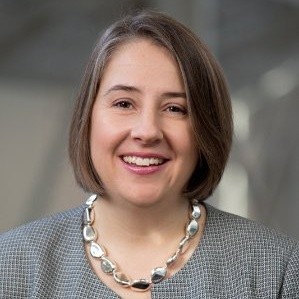
Karen discusses the trends in online learning including in-the-moment and multi-channel.
Sramana Mitra: Let’s start by introducing our audience to yourself as well as O’Reilly Media and your activities in online education.
Karen Hebert-Maccaro: I’ve been at O’Reilly Media as Chief Content Officer for about a year. I have spent much of my career in talent development and talent management roles including Chief Learning Officer for a high-tech company in healthcare. Prior to entering the corporate world, I was in academics. I taught and was the Associate Dean of School of Business in Massachusetts for about 12 years. >>>
Man and Superman: Future of Education

In the One Million by One Million online curriculum, almost eight years ago, I decided to put in a line as a joke: “We’re working on a chip that can be implanted in your brain and it will transfer ALL the entrepreneurial knowledge from my brain to yours. However, this chip is not quite ready yet. So, in the meantime, please study the curriculum and learn the methodology of entrepreneurship that we have designed.”
Well, little did I know that this would cease to be a joke by 2018.
In fact, in the next decade or two, perhaps, this sort of implant will become the future of education.
Thought Leaders in Online Gaming: Jumpstart Games CEO David Lord (Part 3)
Sramana Mitra: What are the trends in your space that are worth discussing?
David Lord: The primary trend that is happening is this integrated classroom. We also have the Google Classroom. There’s this unified front where everything is tied together so that the solutions are delivered to classrooms in an easier way. They also apply to more students because they’re not as rigid. Integrated classrooms, adaptive learning, lower cost of entry are real big trends right now.
We’ve got a lot of assessment software out there. The trends that we’re seeing is a move to open resources. People are trying to >>>
Thought Leaders in Online Gaming: Jumpstart Games CEO David Lord (Part 2)
Sramana Mitra: What results do you have?
David Lord: We’re in 50 to 60 schools already. We’ve got 500 classrooms. We’ve got our first efficacy report that has been peer-reviewed. We’re seeing great results – about 18% improvement in scores in standardized tests using our Jumpstart Academy math product. We’re starting with that and we’ll build the rest of the suite. On the school side, we’ll not only offer grade-based products, but we also offer single subject stack.
There will be a STEM stack with a math product. There’s computational thinking. There will be reading. You can also >>>
