
categories
HOT TOPICS
- The Accelerator Conundrum
- The Startup Velocity Question
- Platform as a Service
- Man and Superman
- Web 3.0 = (4C + P + VS)
- The Future: End of Capitalism
- Capitalism 2.0

Networking
Rendezvous with Sramana Mitra
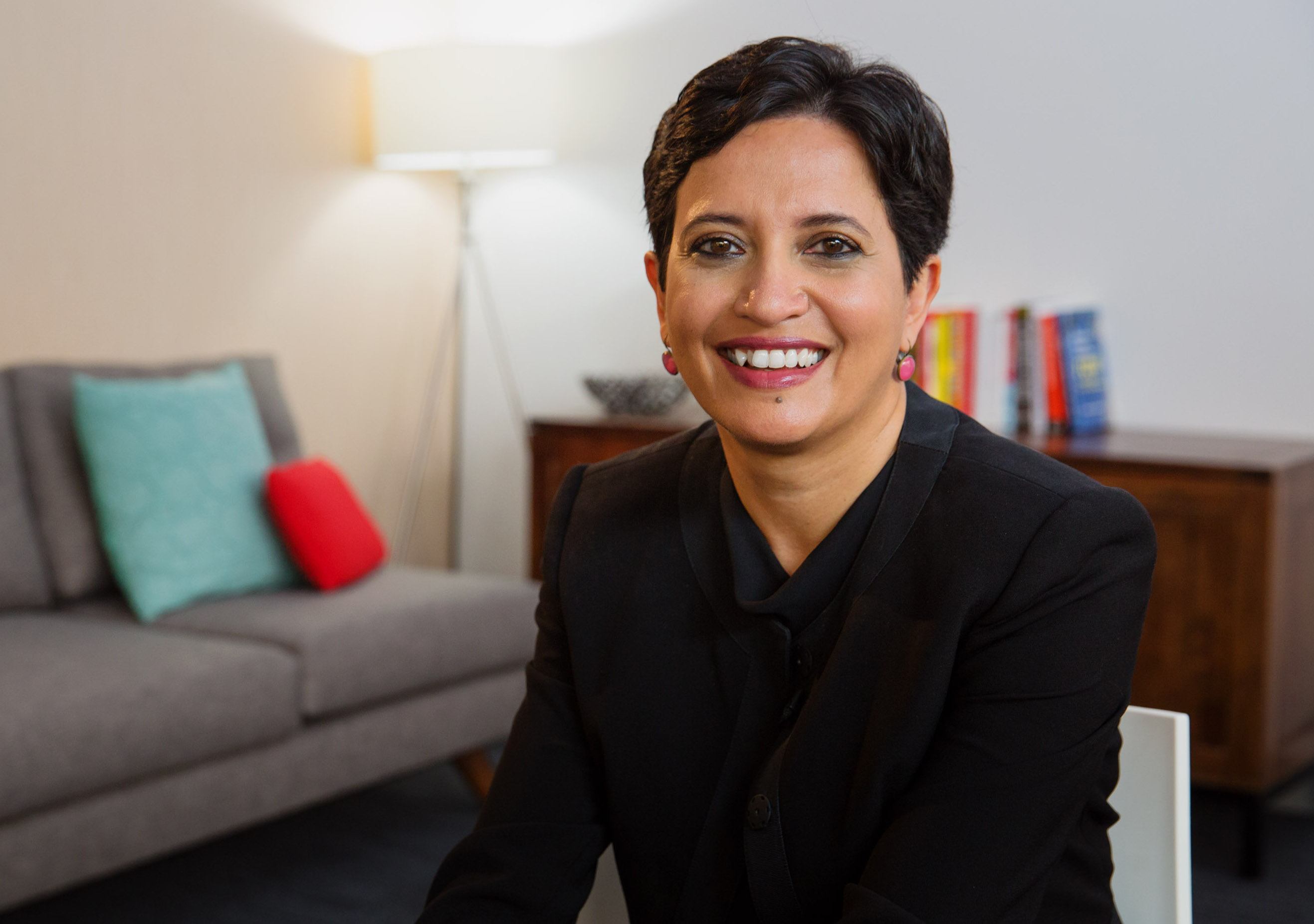
While the 1Mby1M program offers many touch points by which entrepreneurs can personally interact with Sramana Mitra on a regular basis, there have always been daily requests to meet with her in person.
So, by popular demand, we are introducing a new series of opportunities to meet and chat with Sramana in person, in an informal group setting, every month. If you are living in the San Francisco Bay Area or are just in town for a visit, we hope you will add these meet-ups to your calendar and join us. Pre-registration is required, REGISTER HERE.
Location:
Café Borrone
1010 El Camino Real
Menlo Park, CA 94025
Times:
Wednesday, September 27, 5:00 to 6:00 p.m. PDT, Register Here.
Thursday, October 19, 8:00 to 9:00 p.m. PDT, Register Here.
Thursday, November 9, 5:00 to 6:00 p.m. PST, Register Here.
Wednesday, December 13, 5:00 to 6:00 p.m. PST, Register Here.
Bootstrapping Using Services: FullBottle CEO Reed Berglund (Part 5)
Sramana Mitra: What I see is that the bigger disruption is in looking for systematic ways of being able to compensate influencers.
Reed Berglund: That’s one way of looking at it, absolutely. If you examine the initial goal for these influencers on these platforms, they were free platforms. They went on from a hobby standpoint. In many cases, they wanted to use it to market their own skill set whether that’s music, film, or art, but they didn’t approach it with, “I can actually make some money doing this.” To clear the market, there was definitely a need for a mechanism.
Sramana Mitra: How much money can an influencer, who participates in your campaign, expect to make in your sweet spot?
Reed Berglund: It depends on where that influencer is and the life cycle of their influence, if you will. For folks who have 250,000 to 500,000 followers on a platform, they can make anywhere between $1,000 to $2,000 per campaign. >>>
Bootstrapping Using Services: FullBottle CEO Reed Berglund (Part 1)
Continuing with our Bootstrapping Using Services theme, FullBottle is an interesting social media marketing venture that taps into the reach and engagement capacity of influencers to attract customers.
Sramana Mitra: Let’s start at the very beginning of your story. Where are you from? Where were you born, raised, and in what kind of circumstances?
Reed Berglund: I was born in Manhattan and then moved to Los Angeles. I grew up in Los Angeles. I have a mixed European background and both my father and mother worked in media.
Sramana Mitra: What about school? Did you do all of it in Los Angeles?
>>>
Serial Entrepreneur Building a Luxury Business: Trevor Traina, CEO of IfOnly (Part 4)
Sramana Mitra: Let me see if I got everything. You did two companies after Compare..net One was SchemaLogic and the second was the one you sold to Intuit.
Trevor Traina: Yes, as of 2006.
Sramana Mitra: For both of them, you were Chairman, not CEO.
Trevor Traina: Correct.
Sramana Mitra: Were these your ideas or were these ideas generated by people who came to you for funding? How did you connect with the entrepreneurs?
>>>
Serial Entrepreneur Building a Luxury Business: Trevor Traina, CEO of IfOnly (Part 3)
Sramana Mitra: You were doing lead generation for online stores, but the revenue models changed.
Trevor Traina: Correct. Instead of expecting the brands to pay us for consumer choice data, we let the retailers pay us for qualified leads.
Sramana Mitra: That has become the standard business model for that part of the ecosystem—comparison shopping.
Trevor Traina: Very much so, but at that time, it was not the standard model. We ended up taking up $5 million in VC money.
Sramana Mitra: Who was the investor?
Trevor Traina: The lead investor was called Media Technology Ventures. We took money from GE Capital and Intel.
>>>
Serial Entrepreneur Building a Luxury Business: Trevor Traina, CEO of IfOnly (Part 2)
Sramana Mitra: What was the business idea that you were playing with at that point?
Trevor Traina: The business became Compare.net.
Sramana Mitra: Comparative shopping online?
Trevor Traina: Exactly.
Sramana Mitra: What year are we talking about now?
Trevor Traina: 1996.
Sramana Mitra: What happened? How did that go?
Trevor Traina: At that time, all of the web tools were focused on price comparison. It was the era of the shopping box.
>>>
Serial Entrepreneur Building a Luxury Business: Trevor Traina, CEO of IfOnly (Part 1)
Trevor has built several businesses and is now working in a segment that he naturally aligns with—luxury experiences.
Sramana Mitra: Let’s start at the very beginning of your personal story. Where are you from? Where were you born and raised?
Trevor Traina: I was born and raised in San Francisco. On my father’s side, I’m a fourth-generation San Franciscan.
Sramana Mitra: Wow! That’s a rarity around here.
Trevor Traina: Yes it is. I was here through high school. Then, I went to Princeton for my undergraduate studies. Then I went immediately to Oxford to St. Catherine’s College where I got a graduate degree in Social Studies. Then I worked in New York for three years.
>>>
Thought Leaders in Internet of Things: Danny Yu, CEO of DainTree (Part 2)
Danny Yu: We have one application in retail. It’s a restaurant chain. They actually use a temperature sensor to detect whether or not their freezers have stayed cold. The reason why they do that is because if the power goes out and they’re not able to monitor and track the temperature of the freezer; then as per Federal Regulations, they have to throw out their food. That’s thousands of dollars. In this case, the sensors are located near the freezer.
Sramana Mitra: Double-clicking one more level down, how does a sensor pick-up occupancy? Temperature is easier.
