
categories
HOT TOPICS
- The Accelerator Conundrum
- The Startup Velocity Question
- Platform as a Service
- Man and Superman
- Web 3.0 = (4C + P + VS)
- The Future: End of Capitalism
- Capitalism 2.0

India
1Mby1M Virtual Accelerator Investor Forum: With Ashish Gupta of Helion Ventures (Part 4)
Sramana Mitra: Especially for companies coming out of India who sell using inside sales either into the large enterprises or SMB, the SMB market has a lot of headroom in terms of the next 5 to 15 years. That is a market where there is a lot of technology going in. It completely aligns with India’s strength in building global cloud plays.
Ashish Gupta: Especially in those products that are fast follower products. We are still not world class in product management or user interface, but if there is a fast follower opportunity where one can learn from the leader as to what product to put in, that becomes a very interesting example of what you’re calling out. >>>
1Mby1M Virtual Accelerator Investor Forum: With Ashish Gupta of Helion Ventures (Part 3)
Sramana Mitra: It is also an evolution. This was not the case some time back. Startups had a very hard time attracting talent. That has changed. It’s become sexy and cool to work for startups in India. That’s a very good development.
Ashish Gupta: You’re absolutely right. Sexy is the word. In fact, I recently wrote an article giving some assurance to the people who are not in startups. Unlike the Valley where somebody who’s not working in startups is looked upon as a gargoyle, one doesn’t need to start worrying about that phenomenon. You don’t necessarily want people to become entrepreneurs just because it’s sexy. It exacts too high a price from everybody concerned.
Sramana Mitra: What is your current investment thesis? We got a little assessment of what’s happening today.
1Mby1M Virtual Accelerator Investor Forum: With Ashish Gupta of Helion Ventures (Part 2)
Sramana Mitra: Springing off your comment about huge amounts of money coming into India, it’s all relative. Even when you started in about 2006, there was too much money and too few deals. At that time, the product entrepreneurship ecosystem was still very nascent. There weren’t really a lot of fundable deals.
That is not the case anymore. There are a lot more fundable deals. As you said, the entrepreneurs are more sophisticated. There are more global plays starting to happen. It’s true about Silicon Valley too.
Ashish Gupta: About $3 billion got deployed in venture funds over seven years which is a fairly small amount of money, given the opportunity set. Let’s go back to 2006 for a moment and then I’ll address what is happening right now. 2006 was the third coming of the venture industry in India. >>>
1Mby1M Virtual Accelerator Investor Forum: With Ashish Gupta of Helion Ventures (Part 1)
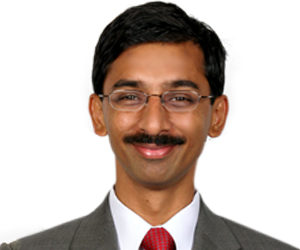
Responding to a popular request, we are now sharing transcripts of our investor podcast interviews in this new series. The following interview with Ashish Gupta, Helion Ventures was recorded in May 2015.
Ashish Gupta, Co-Founder of Helion Ventures, one of the key players in India’s venture capital eco-system. If the topic interests you, this discussion is extremely crisp and insightful.
Sramana Mitra: Ashish and I met when Ashish had done Junglee, which Amazon acquired. I met him when he was about to set off for India to start Helion Ventures. We connected a
1Mby1M Virtual Accelerator Investor Forum: With John Dougery of Inventus Capital (Part 5)
John Dougery: I think that the point about SaaS is all about market size, but we have a different view. We have been doing SaaS companies since we started 10 years ago out of India. We’ve always had a thesis that business software companies are going to be very interesting product opportunities. That came out of our own perspective where we don’t have a geographic bias.
We’re going to invest in startups in Silicon Valley. We’re going to invest in startups in India. We do it out of a thesis-based approach and say, “Which one is the best product?” Even business software that is addressing the Indian market ultimately is going to face competition from overseas or they have to go overseas. They have to have a thesis that they can be number one. >>>
1Mby1M Virtual Accelerator Investor Forum: With John Dougery of Inventus Capital (Part 4)
John Dougery: We had a thesis around services-based businesses in e-commerce for consumers. Financial technologies are a big segment there. We invested in Policybazaar, which is the leading online insurance marketplace by a factor of 10 over its competition now. It was about a factor of five when we first invested.
It’s getting increasing commissions from the insurance providers for selling. We’re the lead investor in FundsIndia, which is the leading online mutual fund marketplace for consumers in India. Again, it provides price discovery, understanding of these products so you can stay away from the products with a high load or an insurance where you cannot be taken advantage of. >>>
1Mby1M Virtual Accelerator Investor Forum: With John Dougery of Inventus Capital (Part 3)
Sramana Mitra: Let’s do a couple of case studies of the kinds of companies that you have invested in and had successes with. If you could, for the benefit of our entrepreneurs, walk us through the logic and thought process of the investment thesis when you invested.
John Dougery: I’ll start with companies that are based in Bangalore. It’s a very typical example of how we work. This is an entrepreneur that we started tracking and mentoring because we liked him back in 2006. This was when we were just forming the firm. We didn’t have the capital yet, but we were engaged in the community and we helped him find his seed financing. >>>
1Mby1M Virtual Accelerator Investor Forum: With John Dougery of Inventus Capital (Part 2)
John Dougery: There are many opportunities and efficiencies in India to build world-class products for business customers out of India. Our focus was, and continues to be, both consumer consumption in India and also business consumption both in India and globally.
About half our companies are business software companies with an increasingly heavy dose of services inside them. It’s not just technology. It can be very high-end advanced services. India has gone through a huge renaissance in the last two years. There has been more than a doubling and tripling in the amount of capital, number of companies being started, and the quality of companies being started. >>>
