
categories
HOT TOPICS
- The Accelerator Conundrum
- The Startup Velocity Question
- Platform as a Service
- Man and Superman
- Web 3.0 = (4C + P + VS)
- The Future: End of Capitalism
- Capitalism 2.0

India
1Mby1M Virtual Accelerator Investor Forum: With Rahul Chandra of Unitary Helion Ventures (Part 4)
Sramana Mitra: Do you want to talk about a couple of companies that you’ve invested in that you are particularly excited about? What are they doing? What value proposition are they providing? What are they experiencing in penetrating the market?
Rahul Chandra: We are saving some of the new names from Unitary for a formal announcement. I’ll cover some of them without the names. Of course, the Helion portfolio that I’m managing is also doing well.
>>>1Mby1M Virtual Accelerator Investor Forum: With Rahul Chandra of Unitary Helion Ventures (Part 3)
Sramana Mitra: Geographically, are we talking about non-major metros now?
Rahul Chandra: We are talking about the next 50 towns and cities. Especially if you travel there, you see the change happening. There is certainly a need to change the mindset of a VC while thinking about customers in these parts.
>>>1Mby1M Virtual Accelerator Investor Forum: With Rahul Chandra of Unitary Helion Ventures (Part 2)
Rahul Chandra: Our thesis, of course, changed in 2011 but it was multi-faceted. We were investing more similarly to a Silicon Valley fund which is consumer enterprise and consumer internet specifically. These are fairly broad terms.
Since you know both sides very well, you know that the depth you can get to in a particular vertical in terms of the disruptions that are happening and the range of companies that you could get to invest in in the Valley is far deeper.
>>>1Mby1M Virtual Accelerator Investor Forum: With Rahul Chandra of Unitary Helion Ventures (Part 1)
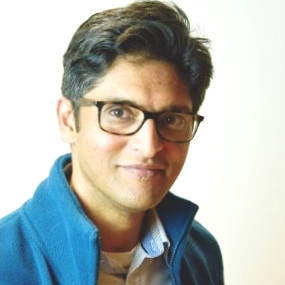
Responding to a popular request, we are now sharing transcripts of our investor podcast interviews in this new series. The following interview with Rahul Chandra was recorded on July 2019.
Rahul Chandra, Managing Director at Unitary Helion Ventures, provides an excellent overview of the opportunity around India’s next 400 million consumers.
Sramana Mitra: Tell us about yourself and about Unitary Helion. What are you investing in? What is the investment thesis?
>>>1Mby1M Virtual Accelerator Investor Forum: With Vikas Choudhury of Pivot Ventures (Part 5)
Vikas Choudhury: Another investment is a cloud kitchen. It’s a company called Inner Chef run by someone I know. That company was riding on the wave of logistics and delivery, which was designed for the e-commerce ecosystem.
As you know, food delivery is becoming very large across the world. A lot of marketplaces have come up in India. Inner Chef has also diversified into local fast food. A lot of millennials today are eating 30 meals a month outside of their homes, which is a huge shift in consumer behavior across the country.
>>>1Mby1M Virtual Accelerator Investor Forum: With Vikas Choudhury of Pivot Ventures (Part 4)
Vikas Choudhury: Entrepreneurs today are either second-generation or second lifecycle. They come to us after having tried something on their own, so we do believe that they will just look at the funnel that is out there.
You have tens of thousands of new companies in India. Less than 1% get angel funding. Less than 1% of that go into venture capital. We’re simply making sure that we are able to pick up companies that have their foundation risked out.
>>>1Mby1M Virtual Accelerator Investor Forum: With Vikas Choudhury of Pivot Ventures (Part 3)
Sramana Mitra: It sounds like you are very comfortable with getting into markets that don’t have a lot of traction, which is unusual in India. What drew you into angel investing at that point?
Vikas Choudhury: It was actually something that wasn’t really orchestrated. I was running a software analytics company at that point in time. There were a bunch of us who were third or fourth generation entrepreneurs that were also looking at alternative investment opportunities in India.
>>>1Mby1M Virtual Accelerator Investor Forum: With Vikas Choudhury of Pivot Ventures (2)
Sramana Mitra: Let’s talk about some of the things you’ve invested in. We’ll talk about Pivot Ventures investments in a moment. You said you’re one of the first angel investors in the Indian ecosystem.
Talk a little bit about what you invested in 2005. How has that landscape changed? How has your investment evolved through that period?
>>>