
categories
HOT TOPICS
- The Accelerator Conundrum
- The Startup Velocity Question
- Platform as a Service
- Man and Superman
- Web 3.0 = (4C + P + VS)
- The Future: End of Capitalism
- Capitalism 2.0

Gaming Trends
1Mby1M Virtual Accelerator AI Investor Forum: Felix Hartmann, Hartmann Capital (Part 6)
Sramana Mitra: So, I’m going to give the audience a pointer. Actually, quite a number of years ago, before the pandemic, I wrote a series called “Man and Superman: Human History Bifurcates,” which addresses exactly this. It’s all available on my blog for you to read. My thesis was that people who do not choose to augment are going to be at a disadvantage, and now we are seeing more real manifestations of that.
>>>1Mby1M Virtual Accelerator AI Investor Forum: Felix Hartmann, Hartmann Capital (Part 1)
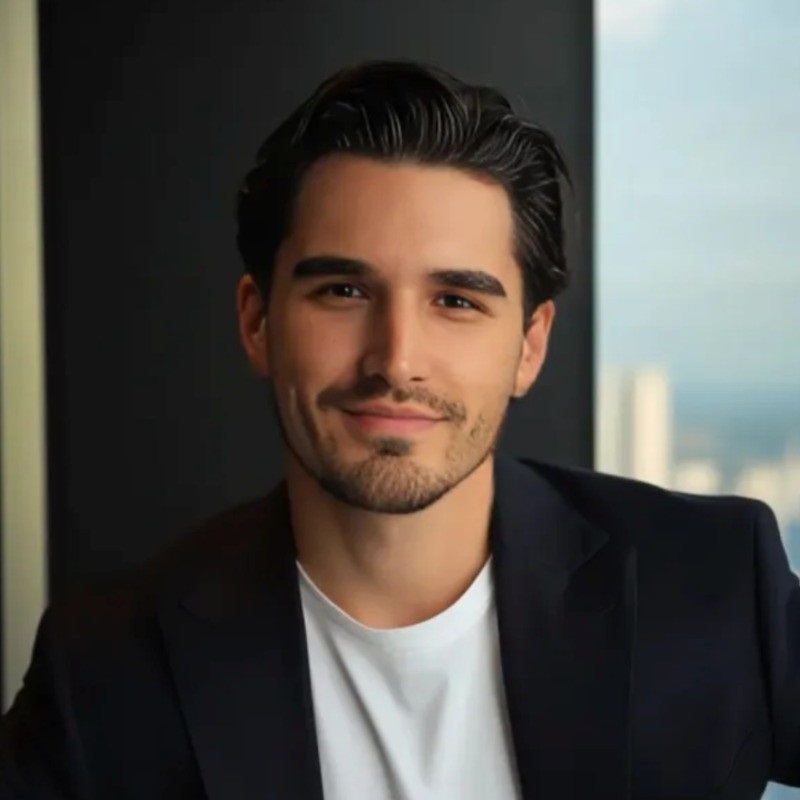
Felix Hartmann, Managing Partner at Hartmann Capital, discusses his firm’s investment thesis. This segment triggered an excellent discussion on Human Augmentation.
>>>Thought Leaders in Online Gaming: Martin Rosinski, Chief Technical Officer Palringo (Part 2)
Sramana Mitra: I would like to spend the next segment of the interview double-clicking on those two areas. Tell us what you see happening in the casual gaming world. What does the lay of the land look like? What are the trends of the casual gaming space? We should talk both about web and mobile and separately. Then we’ll do the same thing for the in-chat gaming industry.
Martin Rosinski: In the case of the casual gaming industry, we’re seeing a wide array of game releases that are being made with beautifully executed visual concepts. It’s only matured as a result of the advent of higher-powered portable mobile devices that are relatively inexpensive. There’s an explosion of titles across genres and things are looking exciting and promising for the industry. One of the gaps that we noticed in what’s happening at the moment is there is this landscape of disparate games that users play but often felt relatively lonely in that gameplay. For the type of casual gaming genre that we operate in, we >>>
Thought Leaders in Mobile and Social: Steve Wadsworth, CEO of Tapjoy (Part 7)
Sramana Mitra: I don’t agree with that at all. We cover e-commerce extensively. I think there’s going to be tons of new brands being built. It’s like how retail and specialty retail have evolved for decades and decades. There are always new brands and user experiences. I think e-commerce will continue to build interesting businesses and there will be new brands and businesses being built. Your point though is true that people who were interacting more through web channels are going to move to mobile devices, that’s correct. But I think the statement that you made about there not being as many opportunities for businesses being built, I don’t agree with that.
Steve Wadsworth: I don’t disagree with anything you just said. I’d be crazy to imply that there’s not opportunity. There’s always opportunities for new businesses particularly when there’s a shift in the paradigm to something like mobile. >>>
Thought Leaders in Mobile and Social: Steve Wadsworth, CEO of Tapjoy (Part 6)
Steve Wadsworth: There are two reasons why some of the other apps may not get the same level of traction. One is user interest. Games are universal. You get much more user engagement there. Secondly, I think a number of app publishers are leaving money on the table because of the model they’ve chosen. Let us look at the magazine business. Historically, their offline model has been advertising and subscriptions. They’ve moved online and to mobile with the same model. While subscriptions is a form of freemium model for monetization, it’s a highly limited model because you’re asking the user to make a very large decision. >>>
Thought Leaders in Mobile and Social: Steve Wadsworth, CEO of Tapjoy (Part 5)
Steve Wadsworth: What our analytics is able to do is watch the user behavior in the app, and based on that behavior assess very quickly which bucket a user falls into. We then use predictive analytics to classify users. We also have engagement tools in that same solution that will provide the publisher the opportunity to further engage any given segment and drive them to monetization either through advertising or in-app purchase. That’s where this ends up going. It’s sophisticated but the freemium model requires that as each user is going to behave slightly differently. You need a sophisticated modeling and analytics capability to understand the behavior of your users, put them >>>
Thought Leaders in Mobile and Social: Steve Wadsworth, CEO of Tapjoy (Part 4)
Sramana Mitra: In your user base, how does that behavior split in those three categories? People who are legitimate free riders, people who are willing to look at advertisements, and people who are actually buying stuff.
Steve Wadsworth: It depends on many things. It depends on the publisher and how they implement the advertising proposition. At a very high level, in aggregate, maybe 4% to 5% of that user base ever purchases anything. Usually, for majority of them, it’s once. On the ad side of it, that side is growing as more and more publishers realize that the pure in-app models is not fully valuing what they’ve created. It’s increasing but I’d say 5% to 10% of people in our user base are engaging in >>>
Thought Leaders in Mobile and Social: Steve Wadsworth, CEO of Tapjoy (Part 3)
Sramana Mitra: What trends do you see in the industry’s treatment of the users that are not going to be high-monetizing users. I have one observation about the industry in general. I’m not talking about just mobile. The Internet is really saddled with an incredibly high number of free riders.
Steve Wadsworth: I think that’s totally accurate, but it’s accurate largely because of the implementation paradigm for most advertising on the web and mobile. The reason I say that is because I think the Internet has done a bit of disservice to advertising by demonstrating to people that the content is free, and around the outside, there are these annoying things that are trying to get your attention. What is lost in that is the traditional model of advertising, >>>
