
categories
HOT TOPICS
- The Accelerator Conundrum
- The Startup Velocity Question
- Platform as a Service
- Man and Superman
- Web 3.0 = (4C + P + VS)
- The Future: End of Capitalism
- Capitalism 2.0

Series A Crunch
1Mby1M Virtual Accelerator Investor Forum: With Yanai Oron of Vertex Ventures (Part 1)

Responding to a popular request, we are now sharing transcripts of our investor podcast interviews in this new series. The following interview with Yanai Oron of Vertex Ventures was recorded in March 2018.
Yanai Oron, General Partner at Vertex Ventures, took us through his firm’s investment focus on deep technology ventures in Israel. The discussion includes an excellent window into how VC firms have different arithmetic depending on their size and structure.
Sramana Mitra: Tell us a bit about Vertex. Tell us about yourself. Let’s introduce you to our audience and also let’s get to know you. >>>
1Mby1M Virtual Accelerator Investor Forum: With Christina Brodbeck of Rivet Ventures (Part 5)
Sramana Mitra: The thing that is unambiguously true is that there aren’t enough female technologists in the industry yet. As a result, there aren’t as many female founders who go out to raise money for credible ventures. That is a fact.
Hence, the number of companies that are female-founded that do get funded is not as high because the starting point is not as high. That can only change if we have more technically trained women in the industry. That has to start at the university level.
Christina Brodbeck: I think that’s true. I also feel that there are many ways to get women into technology. It doesn’t have to be, “Go >>>
1Mby1M Virtual Accelerator Investor Forum: With Christina Brodbeck of Rivet Ventures (Part 4)
Sramana Mitra: This is a slightly different line of questioning. You explicitly mentioned that you are looking for companies that are looking to sell to the female demographics or purchase cycles that are influenced by the female demographics, however, your fund invests in both male and female founders. Can you comment on whether you believe there is a significant bias against female entrepreneurs in the industry?
Christina Brodbeck: I don’t know if it’s an intentional bias, but I do think the result is that it often is more difficult for female founders to raise money. The number of women investing partners is somewhere between 4% and 8%, which is pretty low. Oftentimes, >>>
1Mby1M Virtual Accelerator Investor Forum: With Christina Brodbeck of Rivet Ventures (Part 3)
Sramana Mitra: My observation having talked to lots of investors at this point on this topic is that the answers tend to vary significantly. There’s a class of investors who are only interested in billion-dollar plus TAMs. Then there’s a body of investors coming together now who are doing smaller funds like yourself who are very pragmatic and understand that most of the exits happen in the $50 million to $60 million point.
To make good money off a $50 million exit, you have to do it capital efficiently and make sure that there is a ceiling to how much money you raise to be able to make sure that everybody has a healthy exit in that scenario. That’s a different class of investors. It’s interesting how every venture market is also segmenting big time. >>>
1Mby1M Virtual Accelerator Investor Forum: With Christina Brodbeck of Rivet Ventures (Part 2)
Sramana Mitra: Give us a flavor of what these companies are and how that aligns with your investment thesis. Help us understand your thought process in what about those companies have compelled you to invest.
Christina Brodbeck: I can go through four companies in our portfolio that we invested in. I’ll give you a little background on them and why we decided to invest. One of them is called Dote. It’s a shopping mall on your phone. Pretty much, every store that you would see at a physical shopping mall, you can shop in this mobile app.
What I really like about them and, partially, why we decided to invest is that the founders are very solid. They used to work at a gaming company. They really know how to increase user engagement. That was one of the reasons we invested in them. Another >>>
1Mby1M Virtual Accelerator Investor Forum: With Christina Brodbeck of Rivet Ventures (Part 1)
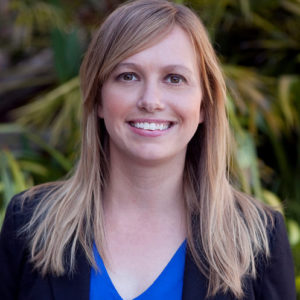
Responding to a popular request, we are now sharing transcripts of our investor podcast interviews in this new series. The following interview with Christina Brodbeck of Rivet Ventures was recorded in March 2018.
Christina Brodbeck, Founding Partner at Rivet Ventures, talks about the firm’s investment thesis of funding companies that target the female demographic in its purchase decision cycle. Very interesting and under-served market.
Sramana Mitra: Why don’t we start by having you introduce yourself a little bit and what your background is? Then we’ll dive into Rivet Ventures. >>>
1Mby1M Virtual Accelerator Investor Forum: With Rajul Garg of Leo Capital (Part 5)
Sramana Mitra: What do you make of unicorn mania? Silicon Valley is going crazy. India tends to be more conservative, but India went crazy too.
Rajul Garg: We all plug into the same mothership. There’s not much that you can do to deviate from that. Smaller funds define a unicorn, in our own heads, as a company which can reach $150 million in value but we really need that kind of scale at least to move the needle for our fund. It’s very hard to enter an opportunity knowing that it will be a nice $20 million profitable business.
Maybe we need funds like that. Early stage venture funds is not the asset class that can cater to small businesses. I do think there’s a real gap. As an angel, I have made investments in those businesses. As a fund, I just don’t see how a fund can invest in those kinds of >>>
1Mby1M Virtual Accelerator Investor Forum: With Rajul Garg of Leo Capital (Part 4)
Sramana Mitra: Have you seen any analysis or reporting on how many active entrepreneurs there are in the Indian ecosystem right now?
Rajul Garg: I do remember seeing that at some point in time, but I’m not able to recall the report. I was at an Accenture event recently. In 2017, my guess is around a thousand companies raised some sort of investment in India. My guess is only one out of 20 or 30 would get there. My guess would be that it’s in the tens of thousands.
Sramana Mitra: As you know very well, I’m a big proponent of bootstrapping. We do see a lot of companies that are doing very well and getting very far with the bootstrapping strategy and showing a lot of validations before going out >>>
