
categories
HOT TOPICS
- The Accelerator Conundrum
- The Startup Velocity Question
- Platform as a Service
- Man and Superman
- Web 3.0 = (4C + P + VS)
- The Future: End of Capitalism
- Capitalism 2.0

Series A Crunch
1Mby1M Virtual Accelerator Investor Forum: With Yipeng Zhao of Embark Ventures (Part 3)
Sramana Mitra: When you say you are comfortable investing $250,000 to $2 million, what do you want to see in terms of validation to be willing to invest?
Yipeng Zhao: A lot of the time, it depends on the stage of the company. We can do anywhere from idea stage, which we call pre-seed. This is basically a smart entrepreneur that has an idea. We are highly focused on deep tech stuff. They have great engineer work they developed but they don’t really have a prototype. >>>
1Mby1M Virtual Accelerator Investor Forum: With Rob Schultz of Serra Ventures (Part 3)
Sramana Mitra: Let’s talk about your portfolio. What are the highlights that you’ve invested in? Especially help us understand at what stage you got involved. What excited you about that particular opportunity that led you to invest so we can get a feel for how you think about opportunities?
Rob Schultz: I can talk about one company in particular that I’m very excited about. We just closed a seed plus round for about $2.2 million in a company called Reconstruct here in our backyard. Reconstruct is in the construction software space. They work with large construction managers. They’re building big buildings such as stadiums. These are buildings that are a hundred million dollar plus of opportunities. They’re using technology to help them be more efficient in managing those projects. >>>
1Mby1M Virtual Accelerator Investor Forum: With Yanai Oron of Vertex Ventures (Part 3)
Sramana Mitra: What are some of the highlights of your portfolio?
Yanai Oron: One of the interesting companies that we had the fortune to invest in was CyberArk (NASDAQ: CYBR). It’s a cyber security company trading with a valuation of around $1.7 billion. They help companies secure their information. Another interesting company is called SolarEdge which is a company that creates technology for solar panels.
A third company that we had the fortune to invest in is Waze. Even though we don’t do a lot of B2C, that was a very unique story that we thought could end very well. It did. If you look at our current portfolio, this year we had a very interesting exit with a company that did cyber security for >>>
1Mby1M Virtual Accelerator Investor Forum: With Yipeng Zhao of Embark Ventures (Part 2)
Sramana Mitra: Talk about what trends you see in your deal flow. You’ve been investing for about a year. What have you seen in the deal flow that can be synthesized as key trends?
Yipeng Zhao: That’s a very good question. We see a lot of different trends. Last year, a lot of AI companies were coming out. For example, there’s AI for medical imagery or AI for workplaces. AI is definitely a trend that we’ve been seeing. This year, Blockchain is definitely picking up pace. There’re a lot of Blockchain companies.
Robotics is another trend. Those are the hot topics we’ve been seeing. Since we are based in LA, we also see a lot of consumer goods and >>>
1Mby1M Virtual Accelerator Investor Forum: With Rob Schultz of Serra Ventures (Part 2)
Sramana Mitra: To write a check for half a million, what do you like to see in terms of proof points or validation?
Rob Schultz: Primarily, we’re looking for great teams. What’s special about the team? We love opportunities where the founder might kick off a story that goes something like this, “I’ve worked in an industry for x number of years. There was this problem that I saw that nobody solved. I left and started a company to go solve that problem.” That’s an ideal story.
The entrepreneur has deep domain expertise that is complemented with a strong technical team. These days, we’re getting good at identifying >>>
1Mby1M Virtual Accelerator Investor Forum: With Yanai Oron of Vertex Ventures (Part 2)
Sramana Mitra: It’s interesting. Your comment that in the US your fund would be called a seed fund is not correct. In the US, $150 million fund is still a Series A fund but it’s a fund that is structured to be able to make smaller Series As. A lot of the traditional venture funds in the US right now are so large. Their Series A will need to be a $5 million to $10 million Series A.
In traditional terms, that’s a Series B or Series C. As a result, there is a lot of smaller funds that have come in to the market who are willing to do the smaller Series A. That’s where you are positioned it seems.
Yanai Oron: Just to comment on that, the definition gets so different between geographies. We actually see Series A as something that is $5 >>>
1Mby1M Virtual Accelerator Investor Forum: With Yipeng Zhao of Embark Ventures (Part 1)
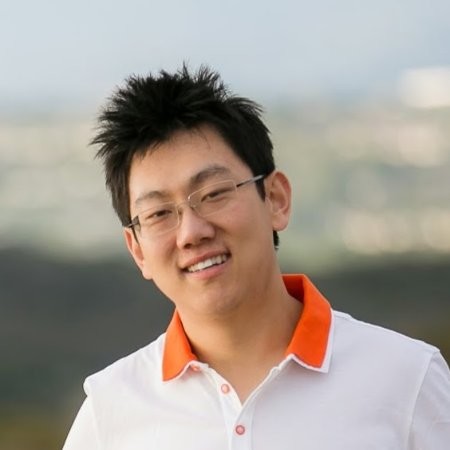
Responding to a popular request, we are now sharing transcripts of our investor podcast interviews in this new series. The following interview with Yipeng Zhao of Embark Ventures was recorded in March 2018.
Yipeng Zhao, Managing Partner at Embark Ventures, talks about the firm’s investment thesis, as well as broader industry trends and what should and should not be funded.
Sramana Mitra: Let’s start by helping our audience get to know you. What is your background? What is the focus of Embark Ventures? >>>
1Mby1M Virtual Accelerator Investor Forum: With Rob Schultz of Serra Ventures (Part 1)
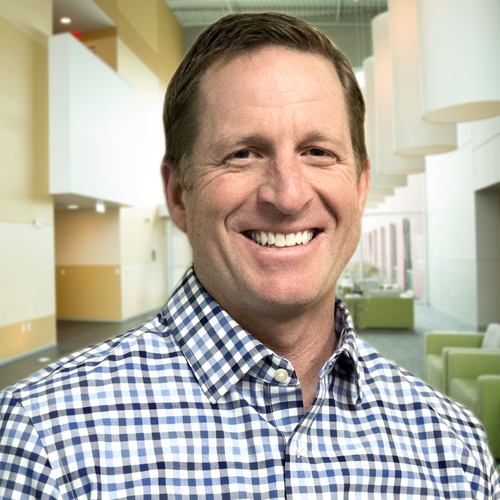
Responding to a popular request, we are now sharing transcripts of our investor podcast interviews in this new series. The following interview with Rob Schultz of Serra Ventures was recorded in March 2018.
Rob Schultz, Managing Partner at Serra Ventures, discusses catering to startups in under-served geographies. His point of view aligns with what we’ve heard from some other investors.
Sramana Mitra: Tell us about Serra Ventures and about yourself. Let us introduce our audience to you. How big is the fund? What is the investment focus? What sized investments do you make? >>>
