
categories
HOT TOPICS
- The Accelerator Conundrum
- The Startup Velocity Question
- Platform as a Service
- Man and Superman
- Web 3.0 = (4C + P + VS)
- The Future: End of Capitalism
- Capitalism 2.0

Series A Crunch
1Mby1M Virtual Accelerator Investor Forum: With Jeremy Schneider and Jonathan Pines of Webb Investment Network (Part 4)
Sramana Mitra: Some examples in your current portfolio.
Jeremy Schneider: There’s many. For example, PagerDuty is a company that we’re huge fans of and feel very lucky to work with. We met them through YCombinator but what made us really want them is, they had a great team.
Two is that Maynard struggled with this problem throughout his career. Every time he took on a new CIO role, one of the first things he has to do is to set up the alerting and on-call system to make sure that the infrastructure stayed up. When we heard Alex and Andrew pitching PagerDuty, we immediately knew that this was a pain point and something that >>>
1Mby1M Virtual Accelerator Investor Forum: With Jeremy Schneider and Jonathan Pines of Webb Investment Network (Part 3)
Sramana Mitra: If you look at your last 15 months deal flow, what do you see? What are the highlights of the trends you see in your deal flow?
Jeremy Schneider: One thing that has been exciting for us is that WIN has been around now for about eight years. In 2017, we started to see repeat entrepreneurs come through our network. We were really excited to have the opportunity to back our founders again. That was one exciting trend on a high level.
As for sectors, last year we started to explore new areas as a team and with our network. We started seeing >>>
1Mby1M Virtual Accelerator Investor Forum: With Jeremy Schneider and Jonathan Pines of Webb Investment Network (Part 2)
Sramana Mitra: Let’s now talk about stage and how big is the fund that you’re investing from. What sized investments do you like to make?
Jonathan Pines: In terms of stage, we tend to focus on the seed stage. That’s not necessarily first angel money in but usually the first sizeable $1 million to $3 million round of funding. We invest around $500,000 in total between Maynard and the affiliates. In terms of how much investing we’re doing overall, we do about 10 new investments per year and then we also will write follow-on investments into our existing portfolio companies. We think of it, on a yearly basis, as a $5 million deployment.
Sramana Mitra: How many investments do you make a year? >>>
1Mby1M Virtual Accelerator Investor Forum: With Jeremy Schneider and Jonathan Pines of Webb Investment Network (Part 1)
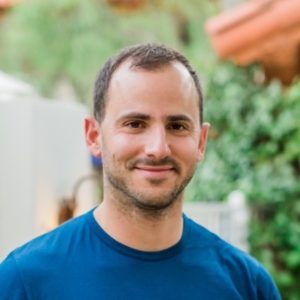
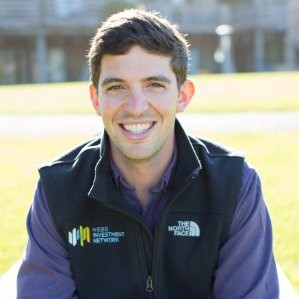
Responding to a popular request, we are now sharing transcripts of our investor podcast interviews in this new series. The following interview with Jeremy Schneider and Jonathan Pines of Webb Investment Network was recorded in March 2018.
Jeremy Schneider and Jonathan Pines, both Directors at the Webb Investment Network, discuss their firm’s investment thesis.
Sramana Mitra: One of you take the lead in introducing the Webb Investment Network. I know you have a very particular model. I’ve known Maynard Webb for a long time actually. Tell us about the program. >>>
1Mby1M Virtual Accelerator Investor Forum: With Yanai Oron of Vertex Ventures (Part 5)
Sramana Mitra: That’s exactly where my question comes from. We are in 2018. There is a lot of stuff that has already been built in all different areas of technology. Right now, there are not as many billion-dollar opportunities, but there are many opportunities that are in that $200 million TAM range.
In a way, there are ways to make money off these opportunities. You build it up to a point and you then flip it a little bit earlier. You can do 3x on these deals. My question comes from exactly that observation. Some of the funds that we are talking to are making that call. Part of the issue also is that there are 700 seed funds in the industry. If everybody is chasing unicorns, there’s not enough of those. >>>
1Mby1M Virtual Accelerator Investor Forum: With Yipeng Zhao of Embark Ventures (Part 4)
Sramana Mitra: What do you think of the Series A gap? There are hundred thousand seed investments and 1,200 to 1,500 venture investments. How do you process that?
Yipeng Zhao: Seed and Series A is always a hard gap. By nature of the business, you will always say most companies die after seed. I don’t think that’s because of the structure of the business. It’s just because of the nature of the business.
As I said, venture startup is a high-risk business. Most of the time, companies die quickly. The gap between seed and Series A is not really an issue. Seed is more of a testing phase. Series A is more serious. If a company is not fundable at Series A, there have to be some consequences. >>>
1Mby1M Virtual Accelerator Investor Forum: With Rob Schultz of Serra Ventures (Part 4)
Sramana Mitra: I have two questions to narrow down on your style of investment. First and foremost, it sounds like you invest across multiple sectors. You do B2B SaaS and you do medical. Do you also do B2C?
Rob Schultz: No. We tend to stay away from B2C opportunities. We don’t understand it that well. They tend to be more capital intensive to do well. It’s not to say that we wouldn’t. We look for differentiation. >>>
1Mby1M Virtual Accelerator Investor Forum: With Yanai Oron of Vertex Ventures (Part 4)
Yanai Oron: There are some very interesting programs in Israel of large corporates creating commercialization programs. They would sometimes look for early-stage companies and sometimes late-stage. Microsoft is a big one that is looking for companies that already have products but are very willing to work with them. It brings them very deep into the organization, and teaches them who in the organization are the right people to speak to.
Sramana Mitra: Very hard. >>>
