
categories
HOT TOPICS
- The Accelerator Conundrum
- The Startup Velocity Question
- Platform as a Service
- Man and Superman
- Web 3.0 = (4C + P + VS)
- The Future: End of Capitalism
- Capitalism 2.0

Series A Crunch
1Mby1M Virtual Accelerator Investor Forum: With Nilanjana Bhowmik of Converge (Part 1)
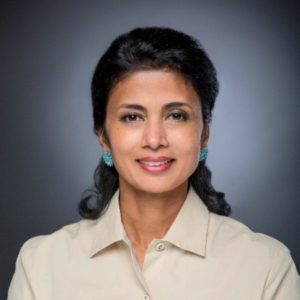
Responding to a popular request, we are now sharing transcripts of our investor podcast interviews in this new series. The following interview with Nilanjana Bhowmik was recorded in March 2018.
Nilanjana Bhowmik, Co-Founder and General Partner at Converge, a new fund started after serving as the long-time General Partner at Longworth Capital. Their focus is B-to-B tech on the East Coast.
Sramana Mitra: Let’s get to know you and your venture capital associations. What is your background. Let’s help our audience of entrepreneurs get to know you. >>>
1Mby1M Virtual Accelerator Investor Forum: With Patricia Nakache of Trinity Ventures (Part 3)
Sramana Mitra: In terms of stage, you said you do seed, Series A, and Series B, your sweet spot being Series A. What is your definition of Series A? What do you like to see if you’re ready to do a Series A investment? What do you like to see in the project?
Patricia Nakache: Ideally, we would want to see some product-market fit. It might just be an initial target market. The product roadmap might leave room for a lot of evolution. We, at least, want to see some initial product-market fit. There’s this rule of thumb that to get Series A funding, you need to be a million dollars in ARR. It is true that that could be meaningful for us, but that’s a bit of a blunt instrument. We do take things like quality >>>
1Mby1M Virtual Accelerator Investor Forum: With Patricia Nakache of Trinity Ventures (Part 2)
Patricia Nakache: Now there’s more of this bifurcation in the market of the haves and the have nots. We read it on the paper. We read on TechCrunch a lot about the haves. There’s probably a larger pool of companies that are having a harder time raising money probably because people have a bit of a hangover from the peak two or three years ago where they probably invested too quickly.
Right now, we’re in a period that is relatively healthy for entrepreneurs and for venture capitalists. There’s a lot of capital out there. I would say relative to 19 years ago when I started in the industry, it is far more competitive for venture capitalists to invest in good opportunities. I would say that is requires a lot more specialization than it did in the past where venture capitalists have had to go a lot deeper to build their credibility in >>>
1Mby1M Virtual Accelerator Investor Forum: With Patricia Nakache of Trinity Ventures (Part 1)

Responding to a popular request, we are now sharing transcripts of our investor podcast interviews in this new series. The following interview with Patricia Nakache was recorded in March 2018.
Patricia Nakache, General Partner at Trinity Ventures, discusses the firm’s investment thesis and some issues encountered by women in technology.
Sramana Mitra: Let’s start by introducing our audience to yourself as well as to Trinity. Tell us about the fund and what you guys have been doing. >>>
1Mby1M Virtual Accelerator Investor Forum: With Clint Chao of Moment Ventures (Part 6)
Sramana Mitra: In our work, we place a lot of emphasis on TAM and on really trying to get to precise bottom-up TAM analysis. In doing so, one thing that I see constantly is ignoring the segmentation aspect. You can say that this applies to everybody, but that’s not true.
Often, solutions are perfect for a subset of the population that you think it applies to. That’s where it finds high velocity adoption, but if you go outside of that segment, it doesn’t have high velocity expansion. If that is the case, you better be aware of that. Better be aware of what your real TAM is versus overestimating the TAM.
Clint Chao: That aspect should be most clear in the traditional IT market. A lot of these startups initially create a white space opportunity not >>>
1Mby1M Virtual Accelerator Investor Forum: With Clint Chao of Moment Ventures (Part 5)
Sramana Mitra: How do you process the current investment climate where capital is moving further and further upstream? How does a seed investor mitigate the Series A gap?
Clint Chao: It’s a great question. It’s clear that your traditional Series A investors have raised the hurdle, if you will, on what qualifies as a viable investment.
Sramana Mitra: Today’s Series A is a Series B or C from 10 years ago.
Clint Chao: We try not to get caught up in the verbiage of what letter it is. The fact of the matter is these companies are being asked to do more >>>
1Mby1M Virtual Accelerator Investor Forum: With Ben Mathias of Vertex Ventures (Part 5)
Sramana Mitra: We are in 2018. A lot of stuff has already been built. Relative to the amount of capital that is available in the market, there are 700 plus micro-VCs in the market right now. There is a huge number of entrepreneurs who are starting companies. We can’t expect that every single venture out of this cauldron of creative energy is going to become a billion-dollar company. It’s just not mathematically viable.
Those are rare market opportunities but there are lots of opportunities for building smaller companies. If you’re looking at $200 million TAM, there are lots of niche opportunities. There are some funds that I’ve talked to who are taking note of that >>>
1Mby1M Virtual Accelerator Investor Forum: With Clint Chao of Moment Ventures (Part 4)
Sramana Mitra: How big is the fund?
Clint Chao: Our first fund is a small fund. It’s a $10 million fund. We launched that officially in 2015. We did a first close on our second fund late last year. That’s a $50 million fund. Our initial investment in fund one averaged around $250,000. We reserve about half the fund for follow-ons. In the new fund, we’ll increase that up to upwards of a million dollars with a similar reserve strategy.
Sramana Mitra: Do you position as a seed fund, pre-seed, post-seed? Where in the spectrum are you positioning the fund?
Clint Chao: We like to call our fund early stage. We deliberately like having that broad definition. These new definitions are great to help >>>
