
categories
HOT TOPICS
- The Accelerator Conundrum
- The Startup Velocity Question
- Platform as a Service
- Man and Superman
- Web 3.0 = (4C + P + VS)
- The Future: End of Capitalism
- Capitalism 2.0

Series A Crunch
1Mby1M Virtual Accelerator Investor Forum: With Charlie O’Donnell of Brooklyn Bridge Ventures (Part 1)
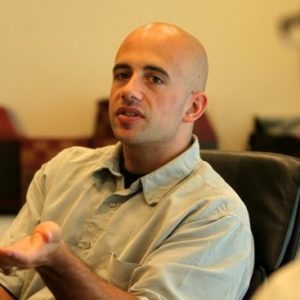
Responding to a popular request, we are now sharing transcripts of our investor podcast interviews in this new series. The following interview with Charlie O’Donnell, Brooklyn Bridge Ventures was recorded in November 2017.
Charlie O’Donnell, Partner at Brooklyn Bridge Ventures, talks about his Seed investing activities and related industry trends.
Sramana Mitra: Let’s start by getting acquainted. Tell us about Brooklyn Bridge Ventures as well as yourself.
Charlie O’Donnell: Brooklyn Bridge Ventures is a seed fund based in Brooklyn, New York. It’s the first fund to be located in Brooklyn. I’ve spent the vast majority of my career in the venture capital asset class, which is actually pretty rare. Usually people >>>
1Mby1M Virtual Accelerator Investor Forum: With David Blumberg of Blumberg Capital (Part 7)
Sramana Mitra: I do want to finish by having you talk to us a little bit about what stage you invest in. You talked a lot about the segment and preference in B2B. Talk to us about stage as a concluding segment.
David Blumberg: We believe that there are many brilliant entrepreneurs all over the world. We are open. We are based in Silicon Valley but we have offices in New York and Tel Aviv. We’ve invested in companies all over the world. We’re open to you wherever you come from. We can help you with the networking and the ties in Silicon Valley. That’s our strength.
If you’re going for a global market, that’s important to you anyway. We invest in the early stage. Seed and Series A is our specialty. A >>>
1Mby1M Virtual Accelerator Investor Forum: With David Blumberg of Blumberg Capital (Part 6)
Sramana Mitra: This is an area of differentiated well-merchandised consumer products in existing categories and sometimes even new categories. This is a very interesting area because Facebook has created an unbelievable platform for entrepreneurs to hyper-target. That hyper-targeting capability never existed until now. It’s amazing.
For $20, the kind of hyper-targeting you can do is incredibly efficient. There’s some good news for the consumer entrepreneurs who are trying to build something. There is some good news and bad news in the story that you told. Amazon has locked up distribution and logistics in such a tight way that all the big categories are locked up. However, the niche and new products is where the e-commerce opportunity is. >>>
1Mby1M Virtual Accelerator Investor Forum: With David Blumberg of Blumberg Capital (Part 5)
Sramana Mitra: What you’re describing is not contrary to the point they’re making. The point they’re making is that we’ve gone through a 30-year extensive innovation phase. The company that really disrupted Nokia is Apple. To some extent, the Samsung world followed. Sitting in 2016 and looking ahead, it seems like there is a bit more of too many superstars dominating and playing monopolistic roles in their individual areas.
Facebook doesn’t really have a competitor right now. Google doesn’t really have a competitor in search. These are dominant industries. On the cellphone side, there’s competition. The business software faces a lot more competition. There’s Salesforce, Microsoft, SAP. They’re all still acquiring companies and staying relevant. >>>
1Mby1M Virtual Accelerator Investor Forum: With Don Hutchison (Part 4)
Sramana Mitra: Talk a little bit about your investments. First and foremost, what have been some of your most interesting and satisfying investments so far?
Don Hutchison: If I look at deals that have graduated, I would say Sugar Media would be one. They’re a software stack for managing personal media at home. It was sold to 2wire. It was a really good outcome. It helped accelerate the management and the installation of higher-order applications and fundamental broadband hardware in the home. 2wire is the preferred hardware and software on the media sell side and others would be for cable. It helped move the market forward.
At the same time, it was a very good outcome for the company and investors. Recurrent Energy is very active. I actually put a team >>>
1Mby1M Virtual Accelerator Investor Forum: With David Blumberg of Blumberg Capital (Part 4)
Sramana Mitra: I was actually reading last week’s Economist expose on superstars. Being a history buff, you may have already read this. Every time there is a major technological revolution, there’s this very disruptive period of 20 to 30 years when there’s a tremendous amount of startup activity and experimentation. Then, that period settles into an oligopoly.
Right now, we do have a bit of an oligopoly in tech. We have four or five companies that are in very dominant incumbent positions that are very difficult to compete with. The amount of data that Facebook has accumulated and the amount of precision with which they’re able to target ads is impossible to compete with. The only other people who have even a remote chance is Google because of their search and intent data capture. >>>
1Mby1M Virtual Accelerator Investor Forum: With Don Hutchison (Part 3)
Sramana Mitra: We see cap notes a lot in Silicon Valley, but if you go outside of Silicon Valley, people are still using equity vary aggressively. We, very often, see terribly diluted deals at very early stages.
Don Hutchison: That is the historic nature of equity investment. The issue you’re talking about is before notes became accepted here. It was a couple of years’ process. Earlier, it was all equity here as well. You didn’t go through as many rounds before jumping to an A. If you got seed, you went to an A. There might be some bridge but the bridge usually came from the incumbents. That usually was discounted notes to the A. The clearest way is to gain traction quickly.
Sramana Mitra: We’ve been saying this. Get traction before you raise money. >>>
1Mby1M Virtual Accelerator Investor Forum: With David Blumberg of Blumberg Capital (Part 3)
David Blumberg: I was speaking at a conference in Mexico recently. It was about transportation of the future. I’m not an expert in that, but I’ve got some theories. A lady from Ford Motors got up and said, “The future of transportation is green, recyclable, and sustainable.” Then a man from Delphi Auto Parts said, “The future of the automobile is connected.”
I got up and said, “I don’t know what the future of automobiles will be. I want to ask you. I have two choices. Is it a product that you buy, own, fill with gas, take to the garage to park and only comes in one shape and size during the lifetime of your ownership? Or is it a service? It comes to you when you call it? It comes as a motorcycle today, or Ferrari the next day? You don’t pay insurance. It’s all wrapped in a service.” >>>
