
categories
HOT TOPICS
- The Accelerator Conundrum
- The Startup Velocity Question
- Platform as a Service
- Man and Superman
- Web 3.0 = (4C + P + VS)
- The Future: End of Capitalism
- Capitalism 2.0

Angel Capital
1Mby1M Virtual Accelerator Investor Forum: With Amos Ben-Meir at Sand Hill Angels (Part 3)
Sramana Mitra: What about your other syndicate group? Does it have the same kind of structure?
Amos Ben-Meir: OurCrowd is actually a venture firm. It was formed around 2013 by an experienced venture capitalist by the name of Jonathan Medved. They basically raised a fund of their own. They vet deals like a normal venture firm would. They built this investor platform where they take part of the allocation they get in a deal and make it available to their credit and investor network.
Their credit and investor network is global. There’re probably around 20,000 people. 50% of their investments are in Israeli >>>
1Mby1M Virtual Accelerator Investor Forum: With Amos Ben-Meir at Sand Hill Angels (Part 2)
Sramana Mitra: Let me try to ask you some questions that would help us understand how to work with you for our entrepreneurs. Let’s double-click down on Sand Hill Angels. Could you please explain to our audience how Sand Hill Angels work? What would be the procedure for us to work with you?
Let’s say you’re interested in a company, how would we go about it? What size of investments should we think about doing with the Sand Hill Angels group? Let’s build on that and we’ll come to your other methods of investment. >>>
1Mby1M Virtual Accelerator Investor Forum: With Amos Ben-Meir at Sand Hill Angels (Part 1)
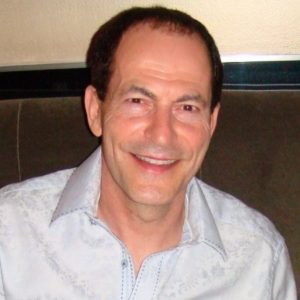
Responding to a popular request, we are now sharing transcripts of our investor podcast interviews in this new series. The following interview with Amos Ben-Meir of Sand Hill Angels was recorded in February 2018.
Amos Ben-Meir, Investor and Board Director at Sand Hill Angels, is a veteran angel investor. You will hear lots of details on working with a prominent angel group, as well as other types of syndicates.
Sramana Mitra: I think what we should start with is having you introduce yourself a little bit to our audience your history with startup investing. You’ve been around for a long time. What does the industry look like from your >>>
1Mby1M Virtual Accelerator Investor Forum: With Rajul Garg of Leo Capital (Part 5)
Sramana Mitra: What do you make of unicorn mania? Silicon Valley is going crazy. India tends to be more conservative, but India went crazy too.
Rajul Garg: We all plug into the same mothership. There’s not much that you can do to deviate from that. Smaller funds define a unicorn, in our own heads, as a company which can reach $150 million in value but we really need that kind of scale at least to move the needle for our fund. It’s very hard to enter an opportunity knowing that it will be a nice $20 million profitable business.
Maybe we need funds like that. Early stage venture funds is not the asset class that can cater to small businesses. I do think there’s a real gap. As an angel, I have made investments in those businesses. As a fund, I just don’t see how a fund can invest in those kinds of >>>
1Mby1M Virtual Accelerator Investor Forum: With Rajul Garg of Leo Capital (Part 4)
Sramana Mitra: Have you seen any analysis or reporting on how many active entrepreneurs there are in the Indian ecosystem right now?
Rajul Garg: I do remember seeing that at some point in time, but I’m not able to recall the report. I was at an Accenture event recently. In 2017, my guess is around a thousand companies raised some sort of investment in India. My guess is only one out of 20 or 30 would get there. My guess would be that it’s in the tens of thousands.
Sramana Mitra: As you know very well, I’m a big proponent of bootstrapping. We do see a lot of companies that are doing very well and getting very far with the bootstrapping strategy and showing a lot of validations before going out >>>
1Mby1M Virtual Accelerator Investor Forum: With Nitin Rai of Elevate Capital (Part 4)
Sramana Mitra: You said you like early exits. Does that mean that if the company is raising more money after your angel round, you actually sell out on those rounds?
Nitin Rai: If we have an opportunity, we will. The biggest issue for any company is when they hit the $2 million to $3 million threshold, they need substantial capital to scale, no matter what the industry. Depending on who the the investor is, many times you see these growth equity firms or large strategic investors coming in.
They may want to own most of the company. They may want to take a larger portion of the company. We’re the small potatoes. We may not have follow-on capital to keep our prorata. If the markups are great, we may just sell out. It could be a 2x in a year to 18 >>>
1Mby1M Virtual Accelerator Investor Forum: With Rajul Garg of Leo Capital (Part 3)
Sramana Mitra: Talk about your current portfolio. What have you invested in? What are the highlights? As you’re describing, give us some insights into when they came to you, what did you see that captured your imagination.
Rajul Garg: We only became a fund late last year and started investing. We’ve made four investments so far. One of the investments is a company called Flick Stock. Let’s say you’re a fashion commerce company in the US or Western Europe. If you put up images that are modeled images versus just a product image, your conversion is higher.
If you’re selling a shirt, you’re better off putting a model wearing a shirt versus just the image of the shirt. However, the cost of getting a modeled image is fairly high because you hire a studio, hire a model, and do editing. For smaller commerce players, it can be as >>>
1Mby1M Virtual Accelerator Investor Forum: With Nitin Rai of Elevate Capital (Part 3)
Sramana Mitra: We’ve done stories on other companies from Oregon that have that dynamic of very capital-efficient execution. We did a story on ShareID, which you probably know. I think they’re Eugene-based.
Nitin Rai: I’m an early investor.
Sramana Mitra: We did that story very early on. They were already quite successful. They were already over $5 million in revenue but with very little capital. We love stories like this. The truth is this is how the entrepreneurship ecosystem of the world – not Silicon Valley – works. We’ve done case study after case study of these capital-efficient success stories. >>>
