
categories
HOT TOPICS
- The Accelerator Conundrum
- The Startup Velocity Question
- Platform as a Service
- Man and Superman
- Web 3.0 = (4C + P + VS)
- The Future: End of Capitalism
- Capitalism 2.0

Angel Capital
1Mby1M Virtual Accelerator Investor Forum: With Bill Bice of Verge Fund (Part 3)
Sramana Mitra: Let’s take SaaS for a moment. If you were to look at a SaaS company, what would you look for? Would you look for MRR metrics?
Would you look for just a proof, just a minimum viable product? What is your comfort zone to get into a company?
Bill Bice: I’m often working with an entrepreneur at the earliest stages. I’m not likely to be interested in investing until they have hit a standard $10,000 in MRR. A big part of my incentive and what I love to do is to help entrepreneurs get to that point.
>>>1Mby1M Virtual Accelerator Investor Forum: With Bill Bice of Verge Fund (Part 2)
Sramana Mitra: Before we get into that, let’s get the fund specifics. How big is your fund? What is your preferred investment criteria.
Bill Bice: We’re an early-stage fund. My partner was the first VC in the state of New Mexico. He really took a different approach in building the firm. He brought together a partnership of entrepreneurs that have all built companies and have had successful exits.
>>>1Mby1M Virtual Accelerator Investor Forum: With Bill Bice of Verge Fund (Part 1)
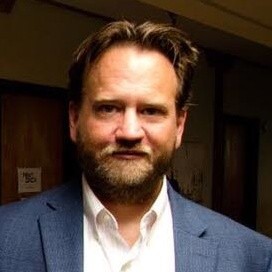
Responding to a popular request, we are now sharing transcripts of our investor podcast interviews in this new series. The following interview with Bill Bice was recorded in April 2019.
Bill Bice, Partner at Verge Fund, discusses New Mexico’s startup ecosystem and his fund’s activities in that region.
Sramana Mitra: Let’s start by getting acquainted and also introducing you to our audience. Let’s learn about Verge Fund. Tell us about yourself. What is your investment thesis? What are the preferences? How big is the fund?
>>>1Mby1M Virtual Accelerator Investor Forum: With Waikit Lau (Part 4)
Waikit Lau: My advice is whether you’re a tech guy or business guy, find your soulmate in some place in business. If you are a business guy, find your counterpart on the tech side. If you’re a tech guy, find your counterpart in business. To me, you just need one other co-founder. This is where your past experience comes into play. Who have you worked well with that you can rely on? That’s really important.
There are two reasons why startups don’t make it. Number one is, they run out of money. Number two, is the founders give up. A lot of times, the root cause of founders giving up is that the founders just don’t get along. That’s really important. You’re going to spend more time with your co-founder than your spouse. It’s non-deterministic. Invest time in going out and networking. Meet people. Spend a few months working with people who excite you and see how that pans out. It’s important to test things out. >>>
1Mby1M Virtual Accelerator Investor Forum: With Waikit Lau (Part 3)
Sramana Mitra: What was the stage at which you got involved?
Waikit Lau: In this case, I was the third or the fourth check. I was very early. There was no lead. They had raised a little bit of angel money. I just said, “I like you guys so much. I like your team and technology. I will help you find a lead. I’ll write my check now.” For them, it’s very early.
Sramana Mitra: What’s very inspiring listening to you for this community is that we constantly see investors who are all wanting to come in after there is validation. When you’re developing complex technology, especially making some very serious technological breakthroughs, it’s not so easy to check all those boxes before going out to raise financing. You need financing to get to those checkpoints. >>>
1Mby1M Virtual Accelerator Investor Forum: With Waikit Lau (Part 2)
Sramana Mitra: Let’s talk a little bit about how you operate. If you put in $25,000 to $50,000, do you operate with a syndicate that would bring in the rest? Do you lead a syndicate? Do you follow into a syndicate?
Waikit Lau: It depends on what the entrepreneur wants and needs. They may say, “I’ve got no connections. I’m new to this, but I’ve got something really interesting.” I essentially help them either put together a syndicate where I run the syndicate or I introduce them to potential lead investors that I think would gel with them personality-wise. In a lot of cases, entrepreneurs already have their syndicates set or they have a lead investor. In which case, I’m just a follower. I’ll just write a check for myself.
In the cases where I have led or co-led, it runs the gamut. I have an AngelList syndicate where I’ve done deals where I run a few hundred thousand
1Mby1M Virtual Accelerator Investor Forum: With Waikit Lau (Part 1)

Responding to a popular request, we are now sharing transcripts of our investor podcast interviews in this new series. The following interview with Waikit Lau was recorded in June 2018.
Waikit Lau, investor and serial entrepreneur, has a refreshingly open attitude towards investing in very early stage companies. Wonderful conversation.
Sramana Mitra: Tell us a little bit about what you have been up to so our audience gets to know you and your background. >>>
1Mby1M Virtual Accelerator Investor Forum: With Utsav Somani of AngelList India (Part 4)
Sramana Mitra: What else is interesting in your structure that is worth discussing that I have not discussed with you yet?
Utsav Somani: I think you’ve pretty much covered everything. There are some really good companies coming out of India.
Sramana Mitra: Can you talk about them?
Utsav Somani: It’s too early to be disclosing some names. I can talk about the first one which is a middleware company that’s doing Blockchain-based API for companies to quickly deploy Blockchain government systems in
