
categories
HOT TOPICS
- The Accelerator Conundrum
- The Startup Velocity Question
- Platform as a Service
- Man and Superman
- Web 3.0 = (4C + P + VS)
- The Future: End of Capitalism
- Capitalism 2.0

Angel Capital
1Mby1M Virtual Accelerator Investor Forum: With Amir Banifatemi of K5 Ventures (Part 3)
Sramana Mitra: You kind of need a tribe of people who think the same way. If you want to work on interesting problems, but necessarily unicorn ideas, then you need other people around in the ecosystem who think like that instead of trying to force feed these kinds of ventures into the more traditional venture world, which operates in a very different way.
Between the 70,000 odd seed investments and about 1,200 series A investments, there is a huge series A gap that gets created. Unless you surround yourself with like-minded investors, it will be very difficult to mitigate the Series A gap, right? >>>
1Mby1M Virtual Accelerator Investor Forum: With Amir Banifatemi of K5 Ventures (Part 2)
Sramana Mitra: Well, I think what you’re seeing around the world is a lot of concept arbitrage; concepts that have been tried in different places are being applied to different markets.
Then you have big categories like cyber security that have been very active fund draws for a very long time, so there’re a very large number of cyber security companies out there. AI is the new attraction area for investors. So now, there aren’t that many wide open opportunities, so there are several niche opportunities. I’m very much in favor of niche opportunities. You can build very nice businesses for small amounts of capital around these niche opportunities, and I think those are very interesting opportunities. >>>
1Mby1M Virtual Accelerator Investor Forum: With Amir Banifatemi of K5 Ventures (Part 1)
If you haven’t already, please study our free Bootstrapping course and the Investor Introductions page.
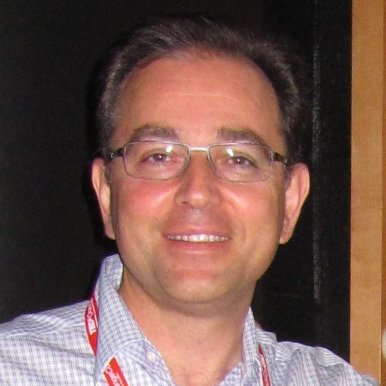
Responding to a popular request, we are now sharing transcripts of our investor podcast interviews in this new series. The following interview with Amir Banifatemi was recorded in October 2017.
Amir Banifatemi is the Founder and Managing Partner of K5 Ventures, a fund focused on pre-seed, seed, post-seed, and early-stage investments from Southern California. Amir is also a Board Member and former President of Tech Coast Angels, a group of 340 angel investors from Southern California.
Angel Investors Discuss the Startups They Finance in Podcasts

For entrepreneurs, there may no longer be as many wide-open opportunities out there to build a startup venture around. However, there remain many, many niche opportunities. Some of these businesses need to be built for very small amounts of capital – $1-2 Million, and sold for $10-15M. Is there appetite among Angels for this type of investment? What about a notch smaller? Invest $250k-$500k and sell for $5-$10M?
For Angel investors, shifts are happening in the world of seed investing, and questions emerge. How do you process the current investment climate where capital is moving further and further upstream? How does an Angel investor (or an entrepreneur, for that matter) mitigate the Series A gap? How do you parse Unicorn mania? As an Angel investor, you could get buried under later stage liquidation preferences. How do you protect yourself?
6 Women Investors Discuss Ventures They Find Interesting in Podcasts

As the numbers of women who are VCs and Angel Investors continue to grow, the startup ecosystem continues to evolve. Will a female perspective be an asset to your startup? Might the influence and support of a strong woman lead your venture to success? Have a listen to the following 30-minute podcast interviews with a variety of Angels and venture capitalists to learn if your business might be of interest to them.
Ann Winblad, Co-founder, Hummer Winblad – Ann is one of the most successful women VCs in our industry, and as I mentioned in my introduction, I have never heard her whining about bias against women. One of the most encouraging things she discussed today is how her firm is sourcing interesting ventures from all over the world, not just Silicon Valley. Mulesoft, one of their hot portfolio companies, had its CEO based in Malta, originally!
Scaling with Angel Money Only in Canada: Joel Lessem, CEO of Firmex (Part 7)
Sramana Mitra: That’s an interesting position because venture capitalists manage portfolios. Entrepreneurs manage their life. Your life is not a portfolio. Life is life. You can do one company. If you fail, then it’s writing off a lot of your life.
Joel Lessem: I’ve had a couple of conversations. I once said, “Here’s the problem. We have different economics.” I said to another venture guy who came by, “You’re playing with your career. It’s other people’s money. You’ve got your eggs in 12 different baskets. I’ve got my eggs in one basket. I don’t have the hurdle you have. You have to make your fund on a couple of deals. I just have to make some money.”
Sramana Mitra: For most people, making money doesn’t mean making hundreds of millions of dollars. In a lot of situations, making a couple of millions is a very happy scenario.
>>>
Scaling with Angel Money Only in Canada: Joel Lessem, CEO of Firmex (Part 6)
Sramana Mitra: There are tons of unhealthy business practices. Pursuing growth at all cost tends to make people practice unhealthy business practices. We don’t believe in that. We believe in sustainable growth. We are much more in tune with what you’re doing. We actually appreciate what you’re doing. The more fundamental-driven approach is what we promote in our accelerator. Our belief is that over 99% of the entrepreneurs out there actually will never qualify for venture funding. Your TAM is not a venture style TAM, yet with $4 million in capital, you can build a $50 million to $60 million company. What’s wrong with that picture?
Joel Lessem: I employ 80 people here. We’re probably hiring another 20 next year. I’m actually on the Board of an organization called Ace Tech here in Toronto. I helped build it to a 100-member company. I did a survey and half of them are unfunded. Combined, we employ 6,000 people. Obviously, the unfunded ones are generally profitable.
Sramana Mitra: Yes, they have no choice.
>>>
Scaling with Angel Money Only in Canada: Joel Lessem, CEO of Firmex (Part 5)
Sramana Mitra: Talk to me a bit about the verticals where you have good adoption. You have a horizontal platform product. What vertical is your strongest?
Joel Lessem: Investment banking is 30% of our business.
Sramana Mitra: What’s the next one?
Joel Lessem: Law firms are 20%.
Sramana Mitra: Is there any other dominant vertical?
Joel Lessem: Resources are 17%. Life sciences are 12%. >>>
