
categories
HOT TOPICS
- The Accelerator Conundrum
- The Startup Velocity Question
- Platform as a Service
- Man and Superman
- Web 3.0 = (4C + P + VS)
- The Future: End of Capitalism
- Capitalism 2.0

Angel Capital
1Mby1M Virtual Accelerator Investor Forum: With Guy Resheff of Grove Ventures (Part 4)
Sramana Mitra: How do you see unicorn mania in Israel? As a seed investor, you could get buried under later-stage liquidation preferences. How do you protect yourself?
Guy Resheff: One thing that I would say that’s markedly different is that, in absolute terms, the number of unicorns generated in Israel is significantly smaller. That has driven some type of thinking within the Israel venture community that strives to achieve more limited goals. There’s a lot of talk about Israeli companies being sold at prices that are too low. Multiples have not been lower, but the exit price is lower.
Sramana Mitra: You’re not really playing the unicorn mania game to that extent which is a good thing. >>>
1Mby1M Virtual Accelerator Investor Forum: With Guy Resheff of Grove Ventures (Part 3)
Sramana Mitra: If you look at the last six months of your deal flow, could you synthesize some of the most interesting trends that you have observed?
Guy Resheff: A common one is artificial intelligence. It’s everywhere.
Sramana Mitra: SaaS for large markets is kind of over. Everything in SaaS right now is niche.
Guy Resheff: If what you mean is that the basic infrastructure has been laid, that’s true in many ways. The caveat that I would say about that is, it really depends on the types of problem that you’re trying to solve. In our case, we are in Hardware-as-a-Service >>>
1Mby1M Virtual Accelerator Investor Forum: With Guy Resheff of Grove Ventures (Part 2)
Sramana Mitra: A follow-on question that comes to my mind is that if you are looking for most of the core R&D to be done before you come in, what is the assumption about how the prospective company funds that R&D phase? Is it coming out of university research? Is it coming out of government agency research? Where is your deal flow coming from?
Guy Resheff: It’s a wide variety of sources. Just to make it clear, we don’t expect a vast majority of R&D to be completed. We usually enter at a point where there is a tremendous amount of additional development to be done. It’s really just the fundamental basic research that we should be able to validate. We have an extensive network of entrepreneurs that we communicate with. >>>
1Mby1M Virtual Accelerator Investor Forum: With Guy Resheff of Grove Ventures (Part 1)
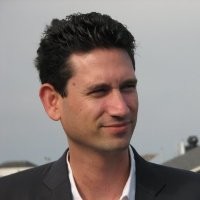
Responding to a popular request, we are now sharing transcripts of our investor podcast interviews in this new series. The following interview with Guy Resheff, Grove Ventures was recorded in December 2017. He is no longer with the firm.
Guy Resheff, Partner at Grove Ventures, focuses the spotlight on Israel.
Sramana Mitra: Tell us about your investing focus. How big is the fund? What size investments do you make?
Guy Resheff: Grove Ventures is an early stage VC focusing on deep technology companies. Anytime you see a very tough technical problem involving deep science, that’s what we are all about. Our fund size is $110 million. We invest in seed and A >>>
1Mby1M Virtual Accelerator Investor Forum: With Jon Staenberg of Staenberg Venture Partners (Part 4)
Sramana Mitra: People are scrambling. There are a lot of people in the industry who are also scrambling to put in little bits of money. By the time you get to raising Series A, you’ve raised six rounds of financing already.
Jon Staenberg: I love to refer to the millennial problem. Pivoting, sometimes, is a completely appropriate response, but you have limited amount of money. You haven’t raised enough money. You pivot twice. Guess what? What do you have? I do get those calls. People say to me, “Is this fundable now?” You should have asked that question two pivots ago.
Sramana Mitra: That’s what we do here in the program. We focus on fundamentals and focus on customers and
1Mby1M Virtual Accelerator Investor Forum: With Jon Staenberg of Staenberg Venture Partners (Part 3)
Sramana Mitra: You said earlier that you’re interested in Bitcoin. Can you talk a bit more about how you’re analyzing the Bitcoin situation? Bitcoin is not a capital-efficient area to invest in. It’s going to be expensive more often than not. How are you parsing the Bitcoin opportunity?
Jon Staenberg: Let me step back for one second on that question. When we started doing this 30 years ago, technology was in a serial rollout. I remember the PC era. We talked about client-server. We talked about the network. Today, we have an absolute hurricane of new technologies being hurled at the world. So there’s no longer one thing to focus on. There are 10 things like Bitcoin.
I have to say I’m just at the beginning of my study of Bitcoin. I can’t sit here and tell you how I’m going to invest in it. I’m sticking >>>
1Mby1M Virtual Accelerator Investor Forum: With Jon Staenberg of Staenberg Venture Partners (Part 2)
Sramana Mitra: Have you selected where you want to play in this continuum?
Jon Staenberg: I haven’t. Maybe it’s a bad strategy on my part to say I’m more opportunistic, but I don’t have a fund right now. I’m investing on my own or I’m investing with syndicates. I have a group of people I work with as well. I back people first. People always ask that question. Is it market or people? I’m backing people.
I’ll give you two investments I’ve done recently. One was a company called Tomorrow.me. Surprisingly, there is a large audience that doesn’t have a will yet. This was the first round of funding. There are some great people around the table but the team had >>>
1Mby1M Virtual Accelerator Investor Forum: With Jon Staenberg of Staenberg Venture Partners (Part 1)
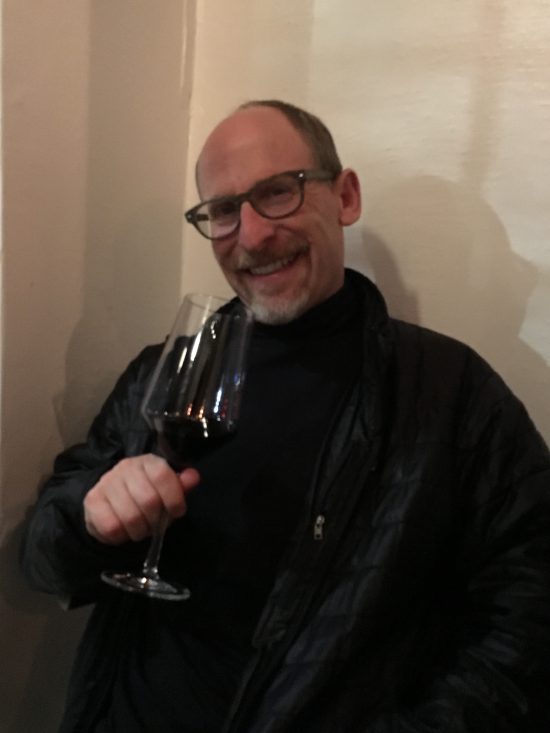
Responding to a popular request, we are now sharing transcripts of our investor podcast interviews in this new series. If you haven’t already, please study our free Bootstrapping course and the Investor Introductions page. The following interview with Jon Staenberg of Staenberg Venture Partners was recorded in November 2017.
Jon Staenberg, Managing Partner at Staenberg Venture Partners, has been a Seed Investor in over 300 ventures over the last 30 years. Jon draws from his long background and discusses some of what interests him to invest in a startup. He also reflects on the question People or Market: Which takes priority?
Sramana Mitra: Tell us about the focus of your investments and let’s introduce you to our audience.
Jon Staenberg: I’m a little disappointed that it took 374 shows to get me on, but I’m glad to be here. I’m kidding, of course! Congratulations to you for doing this. It’s nice to be interviewed. I’m an old dinosaur at this point, having done this for some 30 >>>
