
categories
HOT TOPICS
- The Accelerator Conundrum
- The Startup Velocity Question
- Platform as a Service
- Man and Superman
- Web 3.0 = (4C + P + VS)
- The Future: End of Capitalism
- Capitalism 2.0

Financial Technology
Building a Global Hardcore Financial Technology Company from Brazil: Ricardo Josua, CEO of Pismo (Part 5)
Sramana Mitra: Your core value proposition when it comes to the global market is the combination of payments and core banking?
Ricardo Josua: This is one of the main features. You have everything rolled up in a single integration. The second one was that this is not a monolithic solution. It can provide all the systems, but you can build around them. One of the pains that we try to solve was that we don’t want to be the bottleneck in the development of products from our clients. We have to make sure that we have out-of-the-box solutions if you want a basic product.
>>>Building a Global Hardcore Financial Technology Company from Brazil: Ricardo Josua, CEO of Pismo (Part 4)
Sramana Mitra: Were these Brazilian banks?
Ricardo Josua: The first ones, yes. The first one we went to was the largest bank in Brazil. We ended up closing this large contract. It was an experiment. Just having the open door there changed everything.
Sramana Mitra: Now you can go to all the other Brazilian banks and say that you’re working with the largest bank.
>>>Building a Global Hardcore Financial Technology Company from Brazil: Ricardo Josua, CEO of Pismo (Part 1)
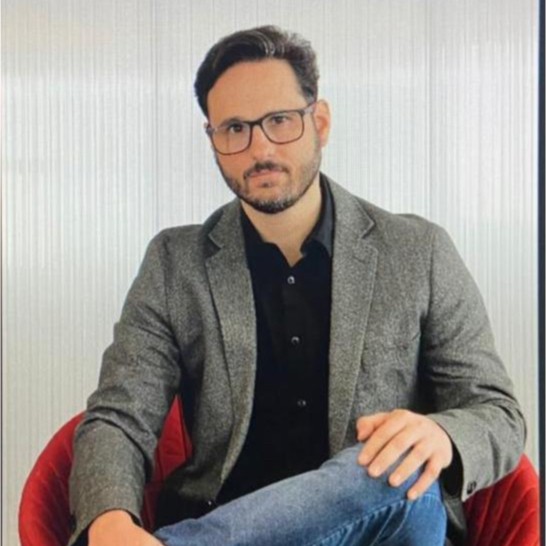
We don’t hear of hardcore B-to-B technology ventures coming out of Latin America very often.
Ricardo is building one that caters to banks and financial institutions, has raised over $100M in financing, has over $25M in revenue, and has major Latin American banks as customers.
Sramana Mitra: Let’s start at the very beginning of your journey. Where are you from? Where were you born, raised, and in what kind of background?
>>>Thought Leaders in Financial Technology: Grain CoFounder and COO Carl Memnon (Part 7)
Sramana Mitra: I’m more curious about financial engineering. You have Y Combinator which takes certain equity and gives you a certain amount of cash. After YC, you said you raised a seed round. Then you raised seed extension. As what? Safes, convertible notes, equity financing?
Carl Memnon: We raised primarily on YC safes.
Sramana Mitra: $15 million on safe?
Carl Memnon: Yes.
>>>Thought Leaders in Financial Technology: Grain CoFounder and COO Carl Memnon (Part 6)
Sramana Mitra: What is the business model?
Carl Memnon: The business model is simply on the backend. We split net interest income with our bank partner. They pay us a service fee which is a function of the net interest income that they get.
Sramana Mitra: How many bank partners do you have now?
Carl Memnon: We have two bank partners. We’re working with a number of other banks that we hope to onboard in the short term.
>>>Thought Leaders in Financial Technology: Grain Cofounder and COO Carl Memnon (Part 5)
Carl Memnon: We have people who have a credit history but have struggled in the past. From talking to users, we’ve discovered that that’s a function of healthcare cost. Hospitalizations, oftentimes, put people in debt. Another is past job loss. That individual now has great cash flow. That user is now looking to repair their credit.
In both circumstances, our users are using it the way they use their credit cards. The credit aspect is almost a byproduct. Users who have that issue come to us. Then the third is a very interesting segment which are people who have great cash flow, great credit scores, and have traditional credit cards.
>>>Thought Leaders in Financial Technology: Grain CoFounder and COO Carl Memnon (Part 4)
Sramana Mitra: When you launched on the app store while you were in YC, what was the regulatory status? Did you go through all these individual state-wise regulatory approval processes for all of them?
Carl Memnon: One of the learnings that came out of Arizona was that we don’t need to be the lender on record. In order to get a financial institution to deploy this technology, we needed to get to that point of maturity in terms of the product.
>>>Thought Leaders in Financial Technology: Grain CoFounder and COO Carl Memnon (Part 3)
Sramana Mitra: After you graduated from Arizona, were you successful in raising funding?
Carl Memnon: Absolutely. We spent a lot of time on the product itself and taking the learnings from that program and implementing it into the product. I wouldn’t necessarily say that the sandbox itself was the thing that allowed us to raise money in the same way that YC will help facilitate raising money. What it did do is it allowed us to get the company in a position where we could raise money.
>>>