
categories
HOT TOPICS
- The Accelerator Conundrum
- The Startup Velocity Question
- Platform as a Service
- Man and Superman
- Web 3.0 = (4C + P + VS)
- The Future: End of Capitalism
- Capitalism 2.0

Financial Technology
Thought Leaders in Financial Technology: SurgePays CEO Brian Cox (Part 3)
Sramana Mitra: You have come this far and you are in 8,000 stores, and you have done it with commission reps.
Brian Cox: Yes, and by finding smaller companies that have plateaued. We were able to acquire them and rebrand them. It doesn’t matter what kind of services you’re giving that clerk behind the counter if he doesn’t realize that this is more convenient.
Sramana Mitra: Aside from wireless prepaid and you talking about broadband wireless, do you have other products that you sell?
>>>Thought Leaders in Financial Technology: SurgePays CEO Brian Cox (Part 4)
Sramana Mitra: I imagine that because this consumer base doesn’t have credit cards, the entire e-commerce capability will be enabled by something like what you’re talking about. Amazon is one e-commerce vendor but Walmart probably wants to get to that segment and various other people who cater to that customer base. Even the food guys.
Brian Cox: The government has done a tremendous amount of studies on the health impact of low-income neighborhoods and their reliance on the corner store. We use the word convenience store because, to us who can just hop on a car and go to Target, it’s a convenience.
>>>Thought Leaders in Financial Technology: SurgePays CEO Brian Cox (Part 2)
Sramana Mitra: Let me probe something very specific. When you made the switch by digitizing that whole process of scratchable prepaid cards but were still catering to this low-end consumer base, what was the go-to-market strategy? How do these consumers reach you and find you?
Brian Cox: That’s a great question. I failed every which way possible in trying to go direct to the consumer. The only way to truly reach the consumer from my perspective was to go into the neighborhoods they live in. There is a false sense to this influencer thing. Our market is not enamored by Silicon Valley influencers, if you will.
>>>Thought Leaders in Financial Technology: SurgePays CEO Brian Cox (Part 1)
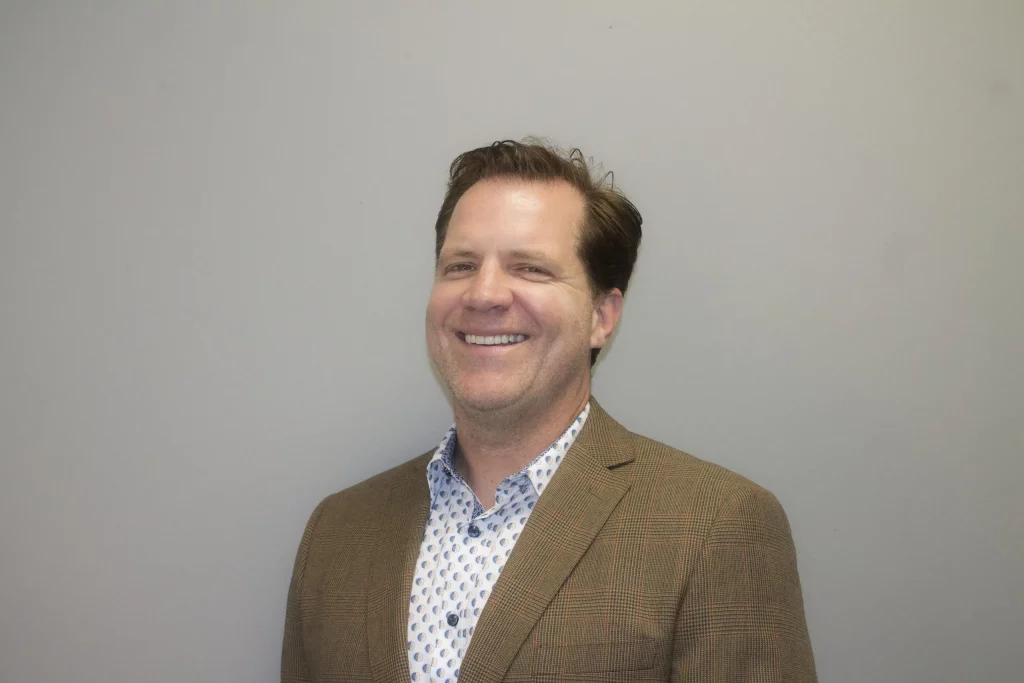
Brian elucidates a world of underbanked, underserved consumers that we don’t hear much about – many lessons for global entrepreneurs interested in unleashing fortune at the bottom of the pyramid.
Sramana Mitra: Let’s start by introducing our audience to yourself as well as to SurgePays.
Brian Cox: I’m the CEO of SurgePays. I’ve been a business builder for 20 years. My main focus has been building companies that service the underbanked. Most of my companies have dealt with recurring revenues through telecommunication or financial services. That has been where I found my niche.
>>>Thought Leaders in Financial Technology: Ed Wallen, CEO of C&R (Part 3)
Sramana Mitra: What dataset are you working with? In this example that you gave where somebody lost a job, where is that signal coming from that person who has lost a job? Are you expecting the person to report that they’ve lost a job? Where is that signal coming from?
Ed Wallen: It depends on the geography that we’re operating in. In the US, UK, and most of western Europe, we have different data providers that trigger or signal those cases to us that we’re able to ingest in real-time as that happens and then react to it.
>>>Thought Leaders in Financial Technology: Ed Wallen, CEO of C&R (Part 2)
Sramana Mitra: Let’s do use cases. You talked about AI models. Where are you firing AI models to achieve what use cases?
Ed Wallen: It’s really on a number of different facets depending on the nature of how our client operates. Generally speaking, the most common are the propensity-to-pay models. They’re action-effect models. What actions are going to lead to the desired outcomes? There’s also mathematical optimization based on the characteristics of this archetype or account. What is the optimal strategy or treatment to put them on that’s going to lead to the desired business outcome?
>>>Thought Leaders in Financial Technology: Ed Wallen, CEO of C&R (Part 1)

Ed talks about combining humanity with Artificial Intelligence to create compelling outcomes in the Collections and Receivables world. Fascinating advances in FinTech.
Sramana Mitra: Let’s start by introducing our audience to yourself as well as to the company.
Ed Wallen: I’m the CEO of C&R Software. I’ve been doing this for about 25 years building, marketing, and selling financial services solutions and systems. For the last 17 years or so, it’s been on the subsegment of that collections and recovery market.
>>>Building a Global Hardcore Financial Technology Company from Brazil: Ricardo Josua, CEO of Pismo (Part 6)
Sramana Mitra: What is your engineering team in Brazil like? How big is it? Is it all in one place?
Ricardo Josua: It’s spread around the world. We have 280 engineers at this point.
Sramana Mitra: In Sao Paulo?
Ricardo Josua: No, they’re remote. Maybe 120 are in Sao Paulo. We have become remote-first. People have an office if they want to go to an office. If the team wants to have a meeting and three of them are in India, everyone has to connect on their own device. It has to be the same experience for everyone. We have now engineers in India and Singapore. We have a growing team of engineers in the US and UK.
>>>