
categories
HOT TOPICS
- The Accelerator Conundrum
- The Startup Velocity Question
- Platform as a Service
- Man and Superman
- Web 3.0 = (4C + P + VS)
- The Future: End of Capitalism
- Capitalism 2.0

ej_temp
Bootstrapping to $7 Million: Constellix CEO Steven Job (Part 3)
Sramana Mitra: Were you doing this out of Washington DC?
Steven Job: Yes, I used to live in a town called Centerville, a suburb of DC. By 2006, it was at a point where it was making several hundred thousand dollars a year, so I hired my first employees who still work with us today.
>>>Bootstrapping to $7 Million: Constellix CEO Steven Job (Part 2)
Sramana Mitra: What year are we in now?
Steven Job: While I was working those crazy hours, I developed a service called DNS Made Easy. It’s still around today. At that time, I was creating it as a side project where I could make a little extra revenue. It was a passion project.
It all started because I wanted to host a website at home. Back in the day, hosting was not for free, but now you can buy a domain name for ten bucks and get hosting and email for free.
>>>Bootstrapping from Guwahati: Anjan Pathak, CTO and Co-Founder of Vantage Circle (Part 4)
Sramana Mitra: How many companies do you have today?
Anjan Pathak: In India, we almost have all the big IT companies as customers except TCS and IBM. Tata has selected us as their preferred vendor.
Sramana Mitra: What revenue level are you at right now?
>>>Bootstrapping to $7 Million: Constellix CEO Steven Job (Part 1)
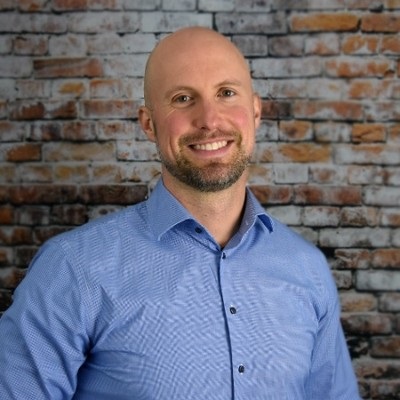
If you haven’t already, please study our free Bootstrapping course and the Investor Introductions page.
Steven has built a lean company with 37 people and has scaled it to $7 million. Read on to learn how.
Sramana Mitra: Let’s start at the beginning of your journey. Where are you from? Where were you born and raised? What kind of background did you have?
>>>Bootstrapping from Guwahati: Anjan Pathak, CTO and Co-Founder of Vantage Circle (Part 3)
Sramana Mitra: Was Infosys paying you extra for doing this?
Anjan Pathak: No, they were not paying, because they were our first customer. We used to get a 5% discount on the gift vouchers. That was our primary revenue. Of course, there was a lot of incoming cash flow, but the primary revenue was anything that they gave.
>>>Bootstrapping from Guwahati: Anjan Pathak, CTO and Co-Founder of Vantage Circle (Part 2)
Sramana Mitra: What was the business model?
Anjan Pathak: It’s very simple. Samsung might have a new phone on their website. They want to sell it directly to corporate employees, but they cannot. They need a medium to market themselves, so they give the deal or coupon to us which can be redeemed on their website.
Sramana Mitra: Does Samsung pay you for this?
>>>Bootstrapping from Guwahati: Anjan Pathak, CTO and Co-Founder of Vantage Circle (Part 1)
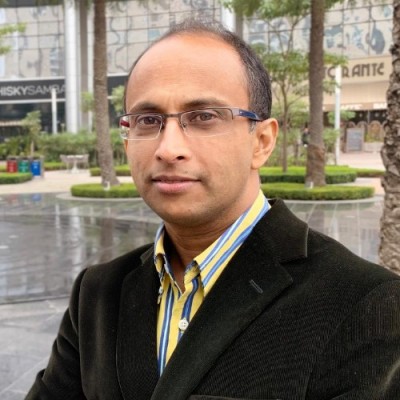
If you haven’t already, please study our free Bootstrapping course and the Investor Introductions page.
I am always thrilled to do stories of pioneering entrepreneurs building technology startups in remote locations. Anjan brings us into the nascent scene in Guwahati, in the North-East Indian state of Assam.
Sramana Mitra: Let’s go back to the beginning of your journey. Where are you from? Where were you born and raised? What kind of background did you have?
>>>Bootstrap First, Raise Money Later: Criteria CEO Josh Millet (Part 5)
Sramana Mitra: Here’s a synthesizing question. What can your technology do that an AI-based approach cannot do?
Josh Millet: In an objective and transparent way, our technology measures key competencies, abilities, and behavior traits that we know are predictive of job success and business outcomes.
>>>