
categories
HOT TOPICS
- The Accelerator Conundrum
- The Startup Velocity Question
- Platform as a Service
- Man and Superman
- Web 3.0 = (4C + P + VS)
- The Future: End of Capitalism
- Capitalism 2.0

Corporate Incubation
Thought Leaders in Corporate Innovation: Anita Sands, Board Member of ServiceNow and Symantec (Part 7)
Sramana Mitra: I love this keeping all your innovation process tied to customers. That may yield slightly less glamorous innovation, but it keeps a good solid innovation process running. The thing that is tricky at this stage where ServiceNow is, it’s now getting to a much larger organization. It’s over 7,000 people.
There are a lot of people that are connected to customers in different ways. Somebody knows something about a customer through the grape vine. This could be a relatively junior engineer or a pre-sales engineer. There needs to be process to bring that knowledge and insight back to the decision makers through a sustained process so that you are not missing opportunities for act three or act five as this company scales. >>>
Thought Leaders in Corporate Innovation: Anita Sands, Board Member of ServiceNow and Symantec (Part 6)
Sramana Mitra: One thing to remember here is that some of the most successful companies in the world have been led by Founder CEOs, whether it’s Bill Gates or Mark Zuckerberg. Steve Jobs, actually, got into a tremendously traumatic situation being fired out of Apple.
By the way, the Steve Jobs that came back to Apple is not the same Steve Jobs that left Apple. He got fired. He matured and came back as a very different CEO. I will defend a little bit the founder’s desire to often drive the vision of the company. Fred stayed in that role for a long time before he handed things over.
Anita Sands: He did and he stayed in the role as Head of Product after that. I’m not at all advocating that the founder needs to disappear into the horizon. >>>
Thought Leaders in Corporate Innovation: Anita Sands, Board Member of ServiceNow and Symantec (Part 5)
Sramana Mitra: Let’s switch gears a bit and talk about hyper growth. The SaaS industry, especially, is going through hyper growth and there are lots of great companies in the market right now that are going through hyper growth. You sit on the board on one of the most prominent of those. Tell us what you have learned about managing hyper growth.
Anita Sands: First of all, it has been an amazing experience. I’ve been on the board for four years now. The company was doing very well before I got there. Hopefully, it will be doing very well after I leave. I think there are some great lessons to be learned. Some of these will seem obvious. When you really see where the rubber hits the road, they’re not that obvious at all. I have yet to >>>
Thought Leaders in Corporate Innovation: Anita Sands, Board Member of ServiceNow and Symantec (Part 4)
Sramana Mitra: I’m going to make a couple of points on what you said. I was talking to Head of Commercial Banking in American Express. She told me that they waited a long time before they got into this micro-lending business which companies like OnDeck and Lending Club are doing. Lending Club is peer-to-peer and OnDeck is working capital loans.
American Express just sat on the sidelines. Then they created their own version of that. That’s going really well. Intuit has done the same thing. They are doing working capital lending with their own money within their own platform. They didn’t buy. They actually built it themselves but they waited for the right time and for the technology to mature. >>>
Thought Leaders in Corporate Innovation: Anita Sands, Board Member of ServiceNow and Symantec (Part 3)
Sramana Mitra: What have you concluded, through your various assignments, in terms of process? What processes have worked for you? What are examples of best practices?
Anita Sands: Let me share two. They’re related. As I look back on all of the various processes that we put in place to try and work through innovation, from ideation right through to end-to-end execution, was that innovation really works for large companies at the perfect intersection of three things. I used to describe it as a three-legged stool. If one of the legs is shorter, then things would topple over.
First of all, there needs to be a market need. There needs to be a customer need for the problem. The second is there has to be a >>>
Thought Leaders in Corporate Innovation: Anita Sands, Board Member of ServiceNow and Symantec (Part 2)
Sramana Mitra: What you said reminds me of an anecdote. We have a close relationship with Intuit. This is probably a few years ago. Snapchat was incredibly hot then. I was talking to the Chief Innovation Officer of Intuit. He said, “In our innovation program, a project like that came up. We chose not to pursue it.” I said, “Why are you saying this as if you regret that? You made the right decision.” Snapchat or equivalent should not be part of Intuit’s innovation agenda. It’s contextually irrelevant.
Anita Sands: That’s right. Just because something is possible doesn’t mean that you should pursue it. I actually found it was very important to bring people on to the same page relative to what innovation is and isn’t in a given firm. My working definition >>>
Thought Leaders in Corporate Innovation: Anita Sands, Board Member of ServiceNow and Symantec (Part 1)
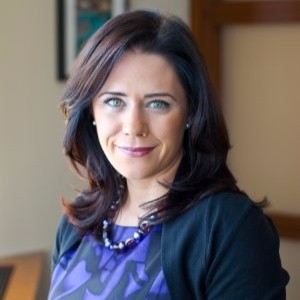
In this interview, Anita Sands discusses Corporate Innovation as it pertains to large enterprises experiencing disruptive change as well as some experiencing hyper growth. She has perspective on both, and generously shares her thoughts.
Sramana Mitra: Anita, you have spent the first part of your career being a physicist. That’s a really interesting training ground for someone who went on to be in the innovation ecosystem. Would you actually tell me a few things about your journey as a physicist and how that ties into where you are today in the innovation ecosystem?
Anita Sands: As you rightly said, I started as a physicist. My undergraduate was in Physics and Applied Mathematics. My Ph.D. >>>
195th 1Mby1M Entrepreneurship Podcast With Anita Sands, Board Member, ServiceNow and Symantec, On Corporate Innovation
Anita Sands, Board Director at Symantec and ServiceNow, talks about corporate innovation as it pertains to large enterprises experiencing disruptive change, as well as some experiencing hyper growth. Anita has perspective on both, and generously shares her thoughts.
Podcast: Play in new window | Download
Subscribe: Apple Podcasts | TuneIn | RSS
