
categories
HOT TOPICS
- The Accelerator Conundrum
- The Startup Velocity Question
- Platform as a Service
- Man and Superman
- Web 3.0 = (4C + P + VS)
- The Future: End of Capitalism
- Capitalism 2.0

SaaS
Best of Bootstrapping: Vainu Co-founder Mikko Honkanen Bootstraps from Finland
Mikko has steadily built an excellent SaaS company from Finland and is now expanding into the US as well. Read on for more.
Sramana Mitra: Let’s start at the very beginning of your personal journey. Where are you from? Where were you born, raised, and in what kind of background?
Mikko Honkanen: I was born in a small town in Finland, 20 miles up north from Helsinki. I studied at Helsinki School of Economics. I also studied at Oxford. Then I spent the last 10 years in the SaaS business. I spent almost seven years at a Norwegian company called Meltwater.
Sramana Mitra: I know Meltwater. I know the founders of Meltwater. They’re here in Silicon Valley.
Thought Leaders in Cloud Computing: Feyzi Fatehi, CEO of Corent Technologies (Part 6)
Sramana Mitra: You have very efficient and seamless ways to retrofit software that is not SaaS-enabled and turn them into SaaS. It think it’s extremely valuable. It’s interesting that you’re doing that.
Feyzi Fatehi: To me, the biggest revolution that could happen in the software industry for the next 10 years is offering the open source solutions as SaaS. I honestly believe that. Have you heard of Los Alamos National Lab?
>>>Thought Leaders in Cloud Computing: Feyzi Fatehi, CEO of Corent Technologies (Part 4)
Sramana Mitra: I’m still missing what is the delta. Let’s say we’re building on Salesforce’s PaaS. Is that not a complete solution to go online as a SaaS product? Do people still need you to be in the middle of that?
Feyzi Fatehi: Salesforce has a specific platform that people develop certain types of applications on. Unfortunately, I’m not familiar with it.
>>>Thought Leaders in Cloud Computing: Feyzi Fatehi, CEO of Corent Technologies (Part 3)
Sramana Mitra: The key takeaway that I get from listening to you is that you can retrofit existing non-cloud software and turn them into SaaS implementation using your PaaS. Where you’re distinguishing versus other PaaS is that you have to build on top of technology stacks.
Feyzi Fatehi: Well said with one exception. The software doesn’t have to be a non-cloud software. 99% of cloud software are not SaaS. Being on the cloud or being on the computer is not the point. That is the biggest misnomer in our industry.
>>>Thought Leaders in Cloud Computing: Feyzi Fatehi, CEO of Corent Technologies (Part 2)
Feyzi Fatehi: We were recognized by the Gartner group as a cool vendor for PaaS. We are one of those stacks specifically designed to transform software to Software-as-a-Service. Those are the capabilities that may take years to build given all the capabilities and stacks that are available.
A good example is Mifos. This is a solution that was funded by IBM and GM about 12 years ago. It was based on Muhammad Yunus’ microfinance idea. He was an economist who won the Nobel Peace Prize. The software was developed using the latest technology.
>>>Thought Leaders in Cloud Computing: Feyzi Fatehi, CEO of Corent Technologies (Part 1)
Feyzi has built technology that enables legacy applications to become SaaS-enabled seamlessly and rapidly. Excellent thought leadership.
Sramana Mitra: Let’s start by introducing our audience to yourself as well as to Corent Technologies.
Feyzi Fatehi: I’m the CEO of Corent Technologies. Corent stands for core enterprise in the same way that Intel stands for integrated electronics. Corent was coined by one of the people who was involved in coining the phrase “Intel Inside”, which I fell in love with when I was in business school doing my MBA in Santa Clara while working for HP.
>>>Best of Bootstrapping: Bootstrapping to an Exit
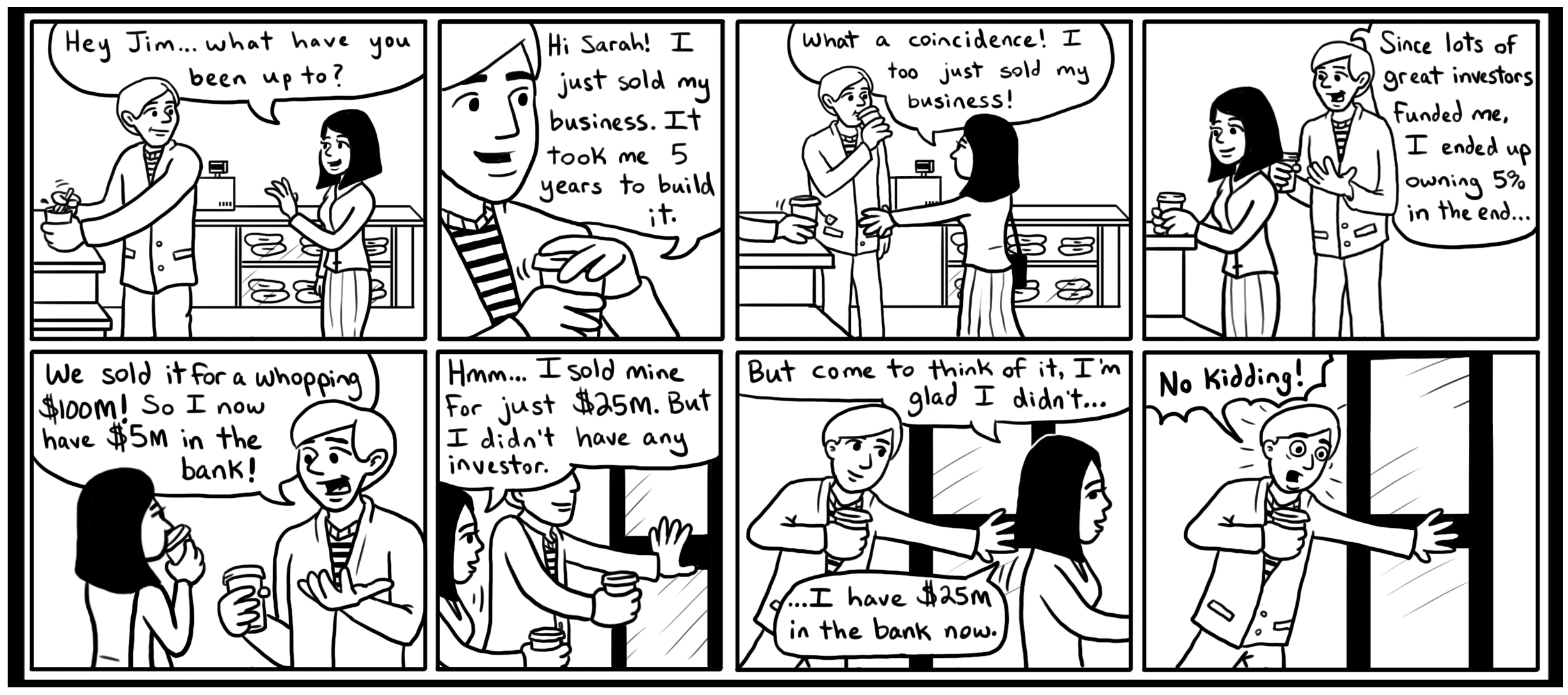
Over the last decade and more, I’ve had the privilege of working with a large number of bootstrapped entrepreneurs. These include self-financed companies and also modestly capitalized startups that operate in a capital-efficient manner applying the principles of bootstrapping. [You can review my Bootstrapping course on LinkedIn to review these.]
For our Seed Capital series of podcasts and blog interviews, I’ve interviewed hundreds of investors, especially micro-VCs and angels who are playing in the early stage game.
I’ve asked all of them the following questions:
Thought Leaders in Cloud Computing: Lior Koriat, CEO of Quali (Part 4)
Lior Koriat: You have a mix of monolithic applications that you’re gradually modernizing and turning them into microservice-based architecture. You’re also balancing the workloads between your private and public cloud. The way we are trying to solve it is, first of all, have everything be available as a service and support those different technologies under the hood so it is possible to really design anything that you need that might morph and change throughout the development process.
In IT and business operations, this has been a very fruitful area for us. As a customer, the ability to not just showcase and demonstrate your product at scale to your audience but also to train and support your partners is a growing trend. We see a lot of adoption there. There are >>>
