
categories
HOT TOPICS
- The Accelerator Conundrum
- The Startup Velocity Question
- Platform as a Service
- Man and Superman
- Web 3.0 = (4C + P + VS)
- The Future: End of Capitalism
- Capitalism 2.0

Bootstrapping
Bootstrapping Course: About Sramana
If you are enjoying this course, check out 1Mby1M Basic, our curriculum-only option.
The 1Mby1M Curriculum has over 1000 case studies of real-life success stories.
If you’re trying to assess why you’re getting rejections, use the 1Mby1M Self-Assessment.
We support your fund-raising efforts through personal introductions to investors.
Bootstrapping a Virtual Company to Scale: Lily Stoyanov, CEO of Transformify (Part 1)

If you haven’t already, please study our Bootstrapping Course and Investor Introductions page.
Lily has built a virtual company with zero employees, all freelancers and scaled it without outside financing.
Read on for more.
Sramana Mitra: Let’s start by introducing our audience to you. Where are you from? Where did you grow up? Let’s start at the very beginning of your journey.
>>>Best of Bootstrapping: Imagine Easy Solutions CEO Bootstraps to Exit
We’re big fans of bootstrapping to exit case studies. Imagine Easy Solutions CEO Neal Taparia’s journey is a wonderful one.
Sramana Mitra: Let’s start at the very beginning of your journey. Where are you from? Where were you born, raised, and in what kind of background?
Neal Taparia: I was born in the suburbs of Chicago. My parents were immigrants from India. I’m first-generation in the United States. I did my undergraduate education in Chicago. After that, I settled down in New York where I’ve been ever since.
Sramana Mitra: What led you to the entrepreneurial journey story?
Neal Taparia: My entrepreneurial roots took place in Chicago in my high school junior year. This was 2000. In fact, it was the early days of the internet. I would go online through America Online and talk to my friends that way. It was a totally different type of internet.
Bootstrapping Course: Welcome
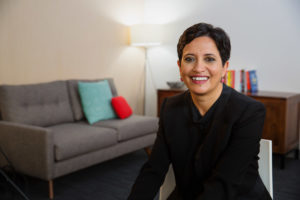
1Mby1M Founder Sramana Mitra wants entrepreneurs to not waste their time and money.
The waste stems from a widespread misunderstanding of how investors think.
Over 99% of founders chase funding before they are fundable.
Here, Sramana teaches how to build with customer money (otherwise known as revenue) until a startup reaches that fundable stage.
Once fundable, a startup can go to investors like a king, not a beggar.
Bootstrapping to Exit: Imagine Easy Solutions CEO Neal Taparia (Part 6)
Neal Taparia: Then we acquired the next biggest site in the space which was called CitationMachine. Later on, we acquired the biggest international site in UK and Australia following that same playbook of building relationships to eventually lead to an acquisition.
By 2016, we were reaching 30 million students across the globe, primarily in Western-educated countries. We had a very strong high-margin business that was driven by ad revenue and subscription revenue. We also had this side business where we were selling to institutions.
>>>Bootstrapping to Exit: Imagine Easy Solutions CEO Neal Taparia (Part 5)
Sramana Mitra: In terms of the monetization strategy, it sounds like you needed advertisers through the ad networks who were going after the student demographics.
Neal Taparia: That’s correct.
Sramana Mitra: Were there ad networks specifically focused on that demographic or were you just working with various ad networks and finding the segment match with each of them?
>>>Best of Bootstrapping: From Laid-off Engineer to Successful Startup CEO
Michelle Munson was CEO and Co-founder of Aspera, a company she began after being laid off. Aspera was her realization that she could not only control her own career path but also create jobs for other people in a culture she established. This story is great inspiration for the thousands who have been let go by their employers. Aspera was acquired by IBM in 2017.
SM: Michelle, where does your story begin?
MM: I grew up in Kansas, on a farm. My family is a five-generation farm family that raises Angus cattle as well as wheat, corn and soybeans. There is a long-standing family tradition in both the line of business and the location. My mom is a retired university professor. I grew up in Kansas, went to school there and went to college at Kansas State University. That is an interesting point with me; I was accepted to MIT and went to Kansas State.
Bootstrapping to Exit: Imagine Easy Solutions CEO Neal Taparia (Part 4)
Sramana Mitra: Why don’t we step through the journey.
Neal Taparia: When we started working on it full-time, I had mentioned that we benefited from a lot of organic growth. What was really interesting is as we focused on it full-time, we were able to understand all these ways to increase ad revenue.
>>>