
categories
HOT TOPICS
- The Accelerator Conundrum
- The Startup Velocity Question
- Platform as a Service
- Man and Superman
- Web 3.0 = (4C + P + VS)
- The Future: End of Capitalism
- Capitalism 2.0

Big Data
Thought Leaders in Big Data: Periscope CEO, Harry Glaser (Part 1)

Harry says, there are nothing but open problems in his space, and highlights some of them! Read on to see what may warrant a new company.
Sramana Mitra: Let’s start by introducing our audience to yourself as well as to Periscope.
Harry Glaser: I’m the Co-Founder and CEO of Periscope Data. Periscope is about five years old. We now have about a thousand customers and we make a platform for data professionals. That’s teams of data analysts, data scientists, and data engineers. We bring those folks together and enable them to really accelerate and turbo charge the kinds of analysis that they >>>
Man and Superman: Can Displaced Blue Collar Workers Become Doctors?

Last week, I was on a panel at the Silicon Valley Directors’ Exchange (SVDX) on Robotics and AI: How will Boards Embrace Tomorrow’s Technologies?
One of the issues we discussed was what happens to displaced workers who lose their jobs to AI.
Thought Leaders in Big Data: Instaclustr CEO Peter Nichol (Part 3)
Sramana Mitra: In this general universe that you’re operating in, where do you see open problems? If you were starting a company today, where would you look into?
Peter Nichol: That’s a great question. I would say there’re probably two areas that are big trends emerging in the future that haven’t been addressed in a meaningful way. We’ve seen the movement of a lot of companies to the cloud. I think the next trend would be companies looking for cloud independence.
In other words, a lot of companies have moved to AWS, for example. That’s the biggest cloud provider out there. Companies are now going to be starting to look for independence. In other words, they don’t want to be locked in to a specific cloud provider. >>>
Thought Leaders in Big Data: Instaclustr CEO Peter Nichol (Part 2)
Sramana Mitra: At the same time, these open source technologies are fairly complex and require external expertise for them to be able to manage them. You are one of the specialized vendors whom they’re reaching out to to get that expertise in?
Peter Nichol: I think that’s right. The companies that base their business on open source are providing a lot of expertise around open source technology. For example in our case, the technology we deal with is a database technology. One example is Cassandra which is a NoSQL database technology. It’s used for storing terabytes, or even petabytes of data, by companies who are writing applications that may have thousands or even millions of users like Facebook. >>>
Thought Leaders in Big Data: Instaclustr CEO Peter Nichol (Part 1)

Peter provides some excellent insights into open problems around which new entrepreneurs can build companies.
Sramana Mitra: Let’s start by having you introduce yourself as well as Instaclustr to our audience.
Peter Nichol: I’m the CEO of Instaclustr. I’ve been CEO and various other positions in the technology industry for nearly 30 years. I’m based in Silicon Valley. Instaclustr is a company that was founded in Australia in 2013 about four years ago. We focus on providing Database-as-a-Service to our customers with a specific focus on not just open source technology starting with Cassandra but >>>
Thought Leaders in Big Data: Chris Astle, CEO of QSR (Part 2)
Sramana Mitra: Let’s do a couple more use cases and then I’ll ask you other questions.
Chris Astle: Other use cases would be from an academic perspective. Our software is used extensively by individuals in terms of their own research and development work. We’re looking at areas of pulling information together from multiple sources whether that’s online or whether that’s going into the field and collecting information. Our software is allowing those individuals to pull that information to one place. Our software is also being used for the research work that those institutions are engaging with. Time and time again, we see that the software that we’re using is providing that high-level of value. >>>
Thought Leaders in Big Data: Chris Astle, CEO of QSR (Part 1)
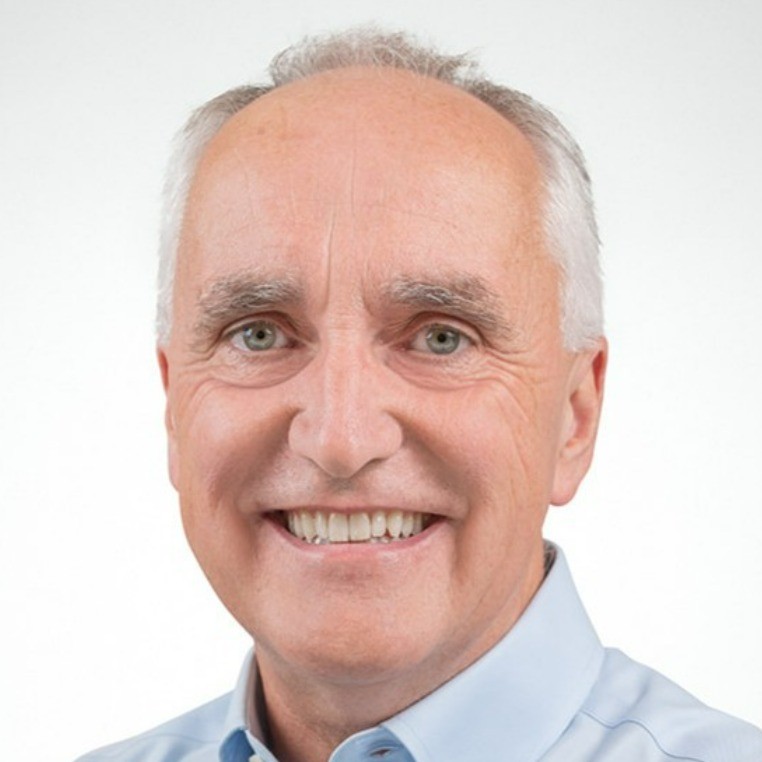
A point of view on Big Data from Australia.
Sramana Mitra: Let’s start by introducing our audience to yourself as well as QSR. Please set some context for us.
Chris Astle: Thank you for inviting me to participate. I’m the CEO of QSR International. QSR International is a software publisher of a product called NVivo. We provide software that helps organizations look at the human aspects of their data and help them to understand the insights that make decisions powerful. Our business is 30 years young. We originally came out of a university here in Australia. >>>
Thought Leaders in Big Data: Paul Nelson, Chief Architect at Search Technologies (Part 3)
Paul Nelson: GDPR is a privacy and data protection regulation by the European Union. Companies are really scrambling to pull this off. If I were going to start a new company, that’s exactly where I would start. Search Technologies has a bunch of components that help. You have to actually run your fingers through the whole organization to gather all that data together and analyze it to see if it has references to people in it. We have lots of connectors. That’s one of our assets for pulling in data from a variety of systems.
We also have a lot of NLP components for scanning content to identify names and ID numbers, email addresses and things like >>>
