
categories
HOT TOPICS
- The Accelerator Conundrum
- The Startup Velocity Question
- Platform as a Service
- Man and Superman
- Web 3.0 = (4C + P + VS)
- The Future: End of Capitalism
- Capitalism 2.0

1Mby1M Virtual Accelerator AI Investor Forum: Daniel Ibri, Mindset Ventures (Part 5)
Sramana Mitra: Earlier you said you wanted to discuss how venture capital is changing. We have a little time, so I want to explore that.
There’s a point of view circulating that even though venture capital is focused on vertical AI right now, AGI could make vertical AI irrelevant. And if AGI arrives during the timeframe when current gen-AI companies mature and prepare for exits, those exit opportunities might disappear. These are existential threats for venture capital. How do you think about that?
>>>Featured Videos
Startup Asia: Why the 1Mby1M Global Virtual Accelerator Is a Game-Changer for Asia Startup Accelerator Ecosysten
This article presents an overview of the Asia Startup accelerator ecosystem. It explores its shortcomings and why the 1Mby1M global virtual accelerator is a game-changer for Asia startup accelerator ecosystem.

Asia’s startup landscape is one of the most dynamic in the world — vast, diverse, and full of promise. Yet it is also fragmented, unevenly supported, and often poorly aligned with accelerator models imported from Silicon Valley. Across the continent, founders face common structural challenges despite wildly different cultural, economic, and regulatory environments.
>>>New Zealand’s Startup Accelerator Ecosystem: Bootstrapping First Blueprint for Sustainable Success

As we’ve seen in earlier parts of this series, New Zealand’s startup ecosystem is small but sophisticated, distributed yet deeply creative. From Auckland’s fintech and SaaS hubs to Wellington’s design-led ventures and Christchurch’s engineering heartland, the country consistently produces high-quality entrepreneurs. But the hard truth is this: venture-style blitzscaling doesn’t fit the New Zealand context.
>>>Video FAQs
Can 1M/1M Help Me Raise Money?
How Does 1M/1M Democratize Entrepreneurship Education?
How Does 1M/1M Democratize Management Consulting?
When Is The Right Time To Join 1M/1M?
Can 1M/1M Help Me With Business Development?
Can 1M/1M Help Me With Market Sizing?
Can 1M/1M Help Me Validate My Product?
Will I Have Private 1-on-1 Sessions In 1M/1M?
How Does 1M/1M Help Entrepreneurs Connect With Silicon Valley?
Mentoring or Consulting?
Why Does 1M/1M Charge $1000 a Year?
Why Does 1M/1M Partner With Local Organizations?
Why Don\’t Mentoring Networks Work?
Why Is It Important To Study With 1M/1M Now?
Dan Stewart Story
Vikrant Mathur Story
Validate Your Startup Idea Before Writing Any Code

Techie founders generally operate in their comfort zones: they like to write code. They often start developing software before they validate with customers. As such, they often build solutions looking for problems.
Do NOT write code before you immerse yourself in customers and develop a deep understanding of what pain you are solving.
>>>New Zealand’s Startup Accelerator Ecosystem: Regional Hubs and the Geography of Innovation

In the previous segment, we explored the structural realities of New Zealand’s startup ecosystem — a small domestic market, limited venture capital, and a compelling need for global reach from day one. In this part, let’s look at the geography of innovation across the country — the regional hubs, their strengths, their accelerator cultures, and how the 1Mby1M virtual accelerator complements and extends their efforts.
>>>1Mby1M Virtual Accelerator AI Investor Forum: Daniel Ibri, Mindset Ventures (Part 4)
Sramana Mitra: Another important point: the probability of building a true unicorn—not an artificial one inflated with liquidation preferences—is extremely low. Many overfunded companies become “zombiecorns” or fail due to overfunding.
>>>New Zealand’s Startup Accelerator Ecosystem: The Conundrum

New Zealand has always punched above its weight. With just over five million people, this island nation has built a surprisingly vibrant startup ecosystem. From Wellington’s creative SaaS ventures to Christchurch’s engineering-driven deep tech, innovation has become part of New Zealand’s national identity. Yet, for all its accomplishments, founders here face a familiar challenge — distance, funding scarcity, and the need for global reach from day one.
>>>Top Non-Equity Accelerators in Mumbai
This article summarizes the top non-equity accelerators in Mumbai, comparing them to 1Mby1M across key dimensions.
By Guest Author Kaushank Nalin Khandwala | Reviewed by Sramana Mitra
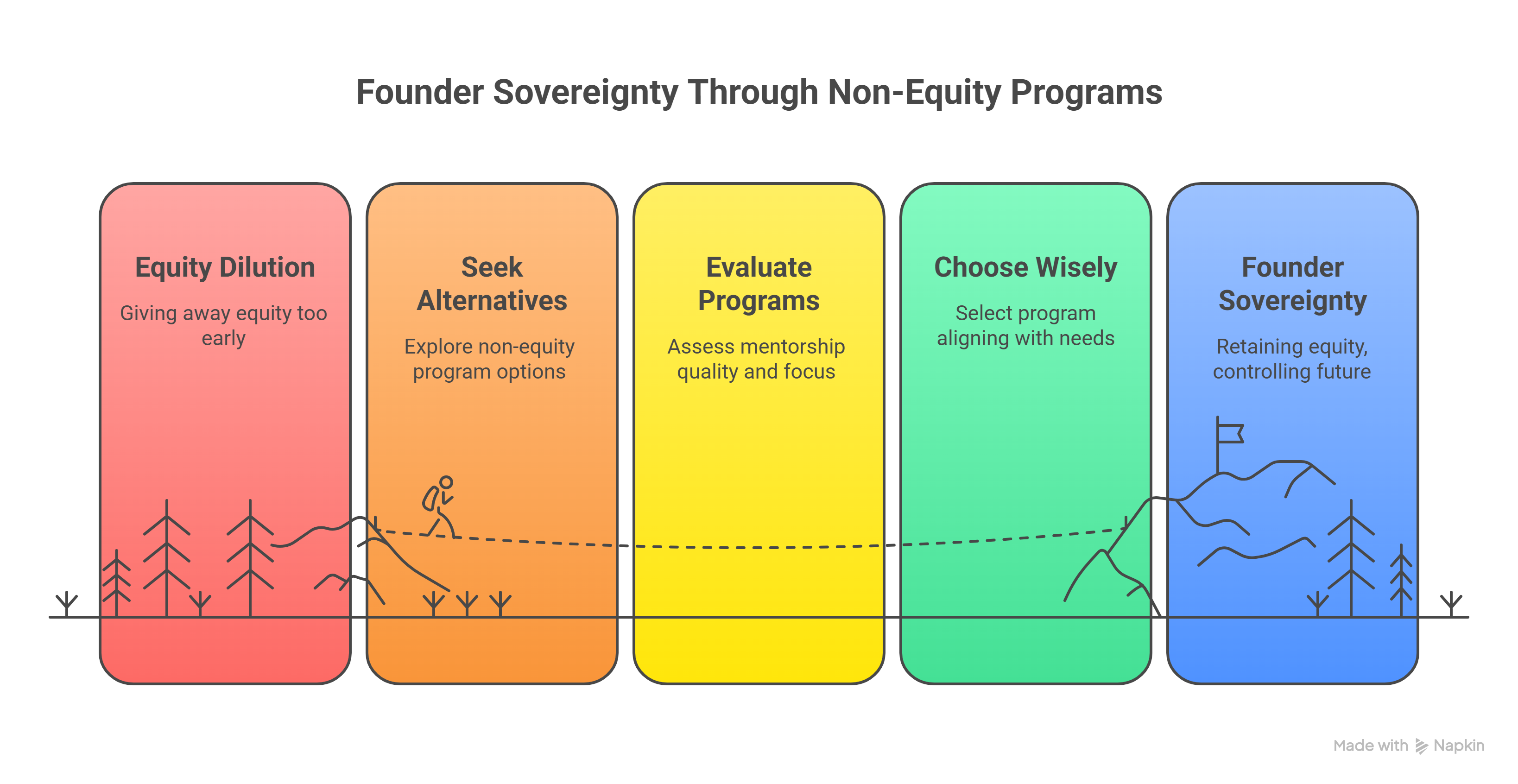
Should founders give up equity for mentorship?
Do zero-equity programs in Mumbai deliver real founder value?
It’s a decision founders shouldn’t have to make in their earliest, most fragile stages. And yet, many Mumbai accelerators continue to demand equity—even before product-market fit.
>>>