
categories
HOT TOPICS
- The Accelerator Conundrum
- The Startup Velocity Question
- Platform as a Service
- Man and Superman
- Web 3.0 = (4C + P + VS)
- The Future: End of Capitalism
- Capitalism 2.0

Alabama, a Growing Startup Accelerator Landscape
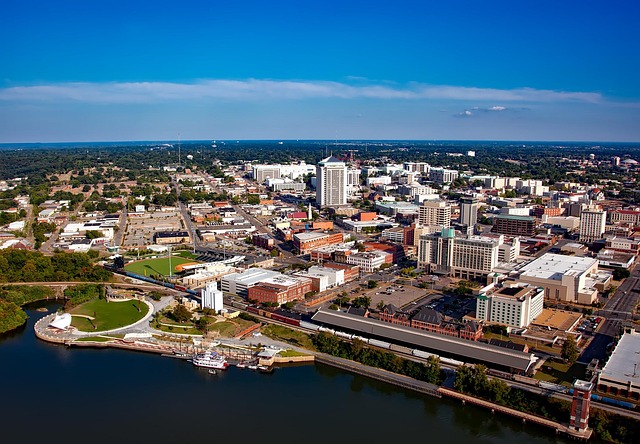
Alabama is an often-overlooked state in the US startup ecosystem, yet it presents significant opportunities for disciplined, capital-efficient entrepreneurship. Anchored by Birmingham, Huntsville, and Mobile, Alabama combines strong university programs, a growing tech presence, and niche industry clusters with the challenges of limited venture capital and regional isolation. These conditions make it an ideal environment for 1Mby1M’s Bootstrap First, Raise Money Later philosophy.
>>>Featured Videos
Top Non-Equity Accelerators in Chennai
This article summarizes the top non-equity accelerators in Chennai, and compares them to 1Mby1M across key dimensions.
By Guest Authors Kaushank Nalin Khandwala and Snigdha Rani Sahoo | Reviewed by Sramana Mitra

This article, part of the Pro-Founder Series, delves into the landscape of non-equity accelerators in Chennai, India. In a post-COVID world, where bootstrapping and sustainable growth are paramount, we examine programs that prioritize founder-first principles, aligning with the ethos of 1Mby1M and the insights from “The Accelerator Conundrum” by Sramana Mitra. This research-driven analysis aims to provide founders with a clear understanding of the available options, focusing on value, continuity, and mentorship, rather than fleeting demo day hype.
>>>Top Accelerators for Solo Entrepreneurs in Chennai
This articles summarizes the top startup accelerators for solo entrepreneurs in Chennai, comparing them to 1Mby1M accross key dimensions like equity, solo founder-friendliness, stage, and focus area.
By Guest Authors Kaushank Nalin Khandwala and Snigdha Rani Sahoo | Reviewed by Sramana Mitra

This article addresses the growing trend of solo entrepreneurship in Chennai, particularly in the post-COVID era, marked by increased layoffs and the rise of independent and first-generation founders. It aims to provide clarity and guidance to solo founders seeking mentorship and validation, rather than just funding or PR, by evaluating the accelerator landscape in Chennai through a lens that prioritizes value, continuity, and sustainable support, aligning with remote-first, equity-free, and lifelong support principles.
>>>Video FAQs
Can 1M/1M Help Me Raise Money?
How Does 1M/1M Democratize Entrepreneurship Education?
How Does 1M/1M Democratize Management Consulting?
When Is The Right Time To Join 1M/1M?
Can 1M/1M Help Me With Business Development?
Can 1M/1M Help Me With Market Sizing?
Can 1M/1M Help Me Validate My Product?
Will I Have Private 1-on-1 Sessions In 1M/1M?
How Does 1M/1M Help Entrepreneurs Connect With Silicon Valley?
Mentoring or Consulting?
Why Does 1M/1M Charge $1000 a Year?
Why Does 1M/1M Partner With Local Organizations?
Why Don\’t Mentoring Networks Work?
Why Is It Important To Study With 1M/1M Now?
Dan Stewart Story
Vikrant Mathur Story
Cloud Stocks: Alphabet Acquires Intersect to Build AI Capacity

Last week, Alphabet (Nasdaq: GOOG) announced its fourth quarter results that soared past market expectations. The company is looking to fund the AI initiatives by raising money through bonds.
>>>The Conundrum in West Virginia Startup Accelerator Ecosystem

West Virginia, historically known for its energy, mining, and manufacturing sectors, is quietly nurturing a capital-efficient entrepreneurial ecosystem. For IT and IT-enabled services ventures, the state presents opportunities to build profitable, sustainable businesses in alignment with the 1Mby1M Bootstrap First, Raise Money Later philosophy. While West Virginia lacks the density of coastal tech hubs, it offers solo founders a low-cost, resourceful environment where disciplined entrepreneurship can thrive.
>>>The Conundrum in Virginia Startup Accelerator Ecosystem

Virginia, with its combination of federal agencies, defense contractors, and a growing technology sector, presents a distinctive environment for IT and IT-enabled services entrepreneurship. The state’s ecosystem is diverse, spanning Northern Virginia’s tech corridors, Richmond’s innovation initiatives, and emerging hubs across the state. Virginia is uniquely positioned to support solo founders who adopt the 1Mby1M Bootstrap First, Raise Money Later philosophy, emphasizing revenue, profitability, and disciplined growth over premature fundraising.
>>>South Carolina Startup Accelerator Landscape and the Case for 1Mby1M

South Carolina’s entrepreneurial landscape is evolving, but it’s doing so unevenly. Pockets of innovation in Charleston, Greenville, and Columbia are gaining traction, yet much of the state remains underserved by capital, mentorship, and scaling infrastructure. Unlike North Carolina, which has a mature research and venture ecosystem, South Carolina startup accelerator ecosystem is still forming — defined by local accelerator initiatives, university-backed programs, and a growing but fragile startup culture.
>>>North Carolina Startup Accelerator Ecosystem: Asheville and the Case for 1Mby1M

While Charlotte, Raleigh-Durham, and Wilmington dominate North Carolina’s startup narrative, the state’s entrepreneurial heartbeat extends well beyond these metros. In fact, the smaller cities — Asheville, Greensboro, Winston-Salem, and the broader Piedmont region — reveal both the promise and pitfalls of the state’s current accelerator ecosystem.
>>>